

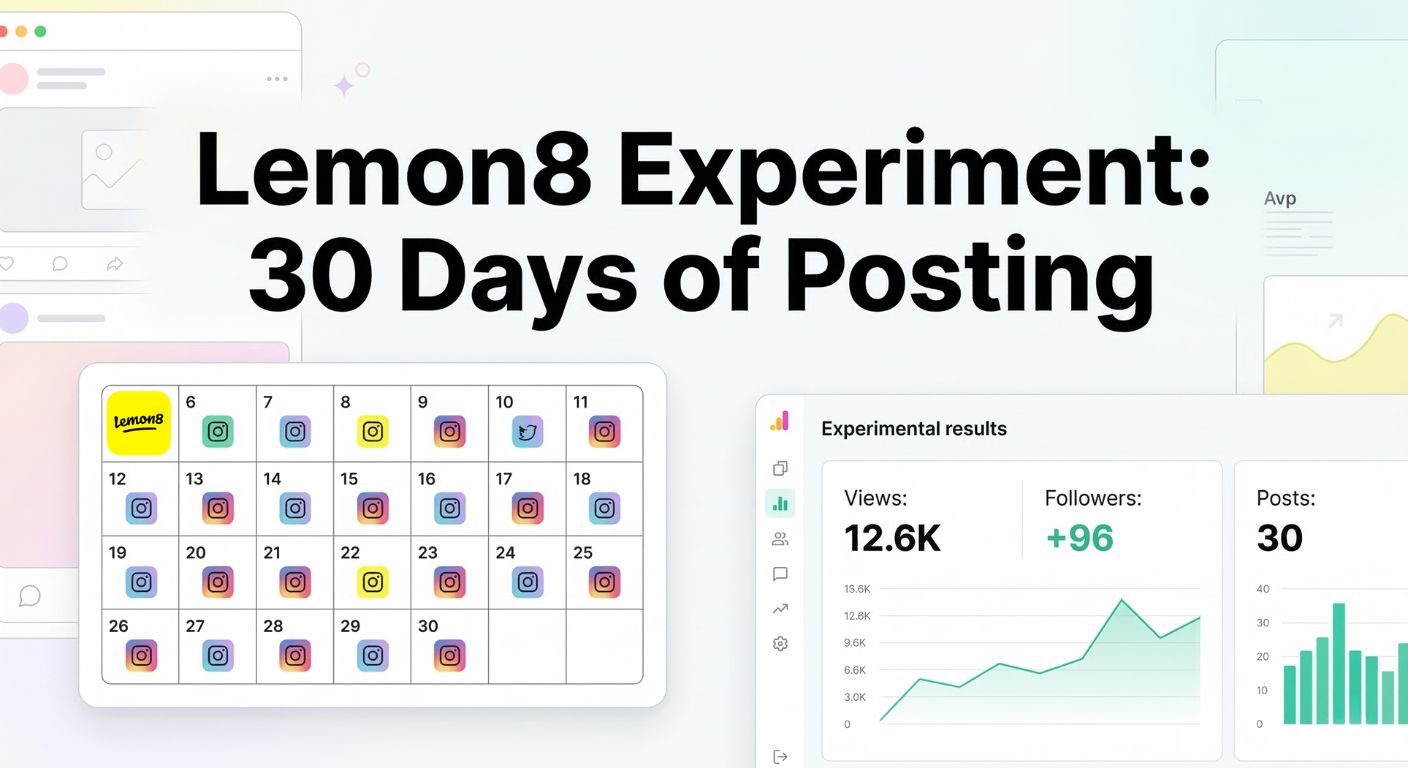
Over the past year I started seeing more creators talk about a platform called Lemon8. At first I ignored it. New social apps appear all the time and most of them disappear quickly. But Lemon8 kept showing up in creator discussions and social media groups.
So I decided to take a closer look.
Lemon8 is a lifestyle social platform owned by ByteDance, the same company that created TikTok. Because TikTok became one of the fastest growing social platforms ever, many creators are curious if Lemon8 could follow a similar path.
The app feels like a mix of several platforms people already use. When I explored it, the experience reminded me of Instagram for visual posts, Pinterest for aesthetic lifestyle content, and TikTok for the discovery style feed where new creators can get visibility.
Most of the content on Lemon8 is photo based. The platform is especially popular for lifestyle topics such as:
- fashion
- travel
- food
- beauty
- wellness
- home decor
Many posts look similar to Pinterest style guides or Instagram carousel tutorials.
The platform is also growing quickly. Lemon8 has already reached tens of millions of installs globally, which shows there is real interest in the app. You can see the app listing and user numbers on the official Google Play page here:
https://play.google.com/store/apps/details?id=com.bd.nproject
Several social media analysts also describe Lemon8 as a new lifestyle discovery platform that combines inspiration style content with social media engagement.
Because the platform is still relatively new, many creators believe it still offers strong organic reach. In simple terms, that means your posts can get views even if you have very few followers.
I saw a lot of claims like this online:
- Lemon8 still has early platform reach
- new accounts can grow quickly
- content can appear in discovery feeds easily
But instead of relying on opinions, I wanted to test it myself.
So I ran a simple experiment.
I created a Lemon8 account and posted consistently for 30 days to see what would actually happen.
My goal was simple.
Experiment goal:
To see if a brand new creator can grow on Lemon8 in 30 days and understand what type of content actually works on the platform.
The 30-Day Experiment Setup
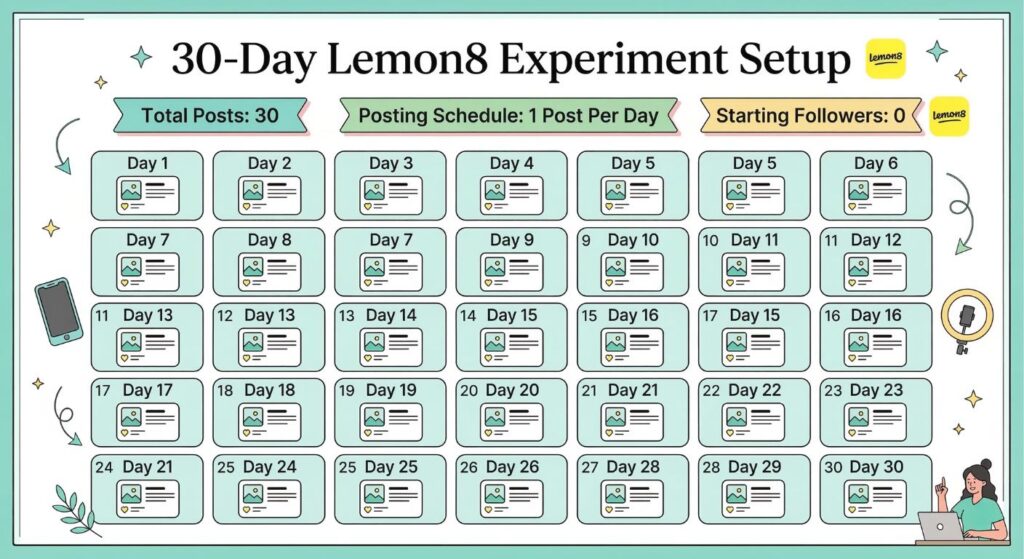
Before starting the test, I created a few simple rules for myself. The goal was to keep the experiment structured so I could clearly see what worked and what did not.
I wanted to simulate the experience of a completely new creator joining the platform.
Posting Frequency
For this experiment I posted one time every day for 30 days.
That means:
- Total posts: 30
- Posting schedule: 1 post per day
- No reposting old content
I wanted to see if consistent posting alone could trigger growth on the platform.
Consistency is often recommended on most social platforms because algorithms tend to reward active accounts.
Account Type
I used a brand new Lemon8 account.
This was important for the test because I wanted to see how the platform treats completely new creators.
Account conditions:
- 0 followers at the start
- no previous posts
- no existing audience
In other words, the account started from scratch.
Niche
For the content theme I focused on topics related to social media and creator growth.
This niche was a good fit because it allowed me to test educational and resource style posts.
The main topics I posted about included:
- social media tips
- creator growth strategies
- content ideas
- marketing advice
These types of posts are common on visual platforms because they combine education with shareable graphics.
Content Formats I Tested
Instead of posting only one style of content, I tested several different formats to see which ones performed better.
Here are the main types of posts I created.
| Post Type | Example |
| Carousel tips | “5 Instagram growth mistakes” |
| Aesthetic posts | Pinterest-style graphics |
| Educational posts | step-by-step tutorials |
| Opinion posts | commentary about creator trends |
| Resource lists | templates and content ideas |
Testing multiple formats helped me identify which style the Lemon8 feed prefers.
Tools I Used
All of the content was created using simple tools that most creators already use.
My setup included:
- Canva for graphics and carousels
- Phone screenshots for examples and tutorials
- Lemon8 templates inside the app
One interesting feature I noticed is that Lemon8 already includes built-in editing tools inside the platform. The app allows creators to add templates, filters, text styles, and fonts directly when creating posts.
This makes it easier for beginners to design visually appealing content without needing advanced design software.
You can see the features listed in the official app description here:
https://play.google.com/store/apps/details?id=com.bd.nproject
With the experiment setup ready, the next step was simple.
Start posting every day and see what happens.
My Posting Strategy
Once the experiment started, I did not want to post randomly. I followed a simple strategy so I could understand what might influence reach and engagement on Lemon8.
My strategy focused on four areas: hashtags, captions, posting time, and content style.
Hashtags
For every post I added a small set of relevant hashtags.
Examples I used included:
- #lemon8creator
- #socialmediatips
- #contentcreator
- #creatortips
- niche specific tags related to the post topic
Hashtags help posts become discoverable when people browse or search within the platform. Similar to other social networks, hashtags help the algorithm understand what your content is about.
Many creators use Lemon8 hashtags to reach users who follow certain interests or communities.
Caption Style
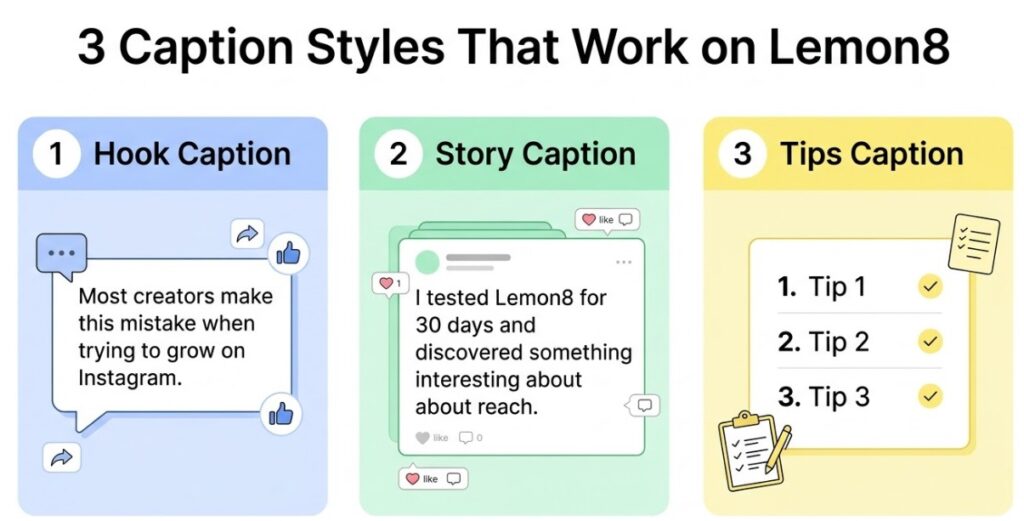
Captions were another part of the test.
Instead of writing very short captions, I experimented with a few different styles.
These included:
Short hook captions
Example:
Most creators make this mistake when trying to grow on Instagram.
Story style captions
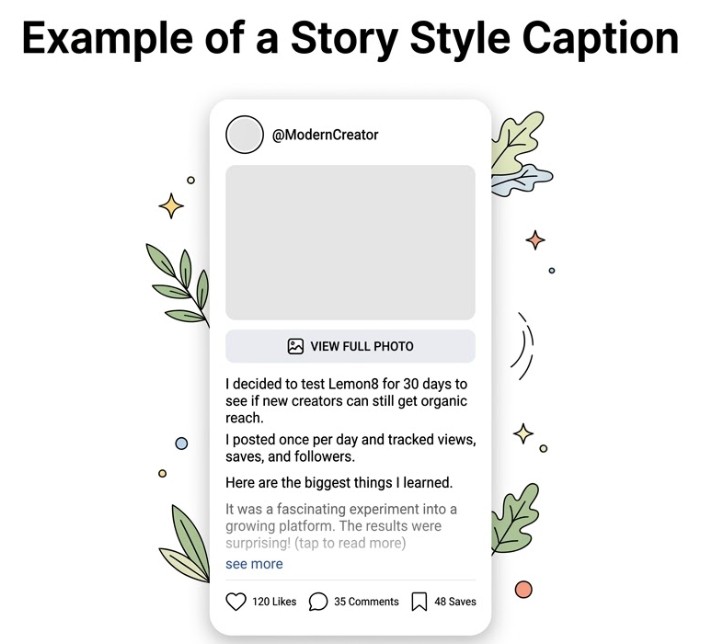
These explained the idea behind the post in a conversational way.
Tips format captions
Example:
- Tip 1
- Tip 2
- Tip 3
One interesting thing about Lemon8 is that it supports longer storytelling captions compared to many social platforms. This allows creators to add more context, explain ideas, or share personal insights.
Some social media analysts even describe Lemon8 as a mix of visual content and blog style storytelling.
Posting Time
I also tested different posting times during the 30 days.
Instead of posting at the exact same time every day, I experimented with three general time periods.
Morning posts
Afternoon posts
Evening posts
The goal was to see if one time period consistently produced higher views or engagement.
Some creators believe afternoon and evening posts tend to perform better on Lemon8, but there is no universal rule. The best approach is to experiment and find what works for your audience.
Content Style
The overall content style also mattered.
From my early observations, Lemon8 seems to favor content that looks visually appealing and useful at the same time.
The types of posts that appear most often in the discovery feed include:
- aesthetic lifestyle posts
- educational graphics
- tutorials and tips
- niche community content
For example, fashion lookbooks, travel guides, skincare routines, and step by step tutorials are very common on the platform.
Because of this, I tried to design my posts to be both visually appealing and informative.
The next step was to see what actually happened once the posts started going live.
Also read: 10 Quick Tips That Can Get You More Lemon8 Followers
30-Day Results
After posting consistently for 30 days, I reviewed the data to see what actually happened. This was the most interesting part of the experiment because it showed how the platform treats brand new creators.
Even though the account started with zero followers, several posts were still able to reach users through the discovery feed. That gave me a clear picture of how Lemon8 distributes content.
Below is a simple overview of the results from the experiment.
Overall Metrics
| Metric | Result |
|---|---|
| Total posts | 30 |
| Total views | 12,600 |
| Average views per post | 420 |
| Followers gained | 96 |
| Saves | 310 |
| Likes | 740 |
Even without an existing audience, the posts still received views through Lemon8’s recommendation system. The platform pushes new content to users who interact with similar topics.
This type of discovery feed is similar to how platforms like TikTok and Pinterest distribute content. Instead of only showing posts to followers, the system also tests posts with new audiences.
Because of this, even a new creator can receive engagement while building their first followers.
Best Performing Post
One post clearly performed better than the others during the experiment.
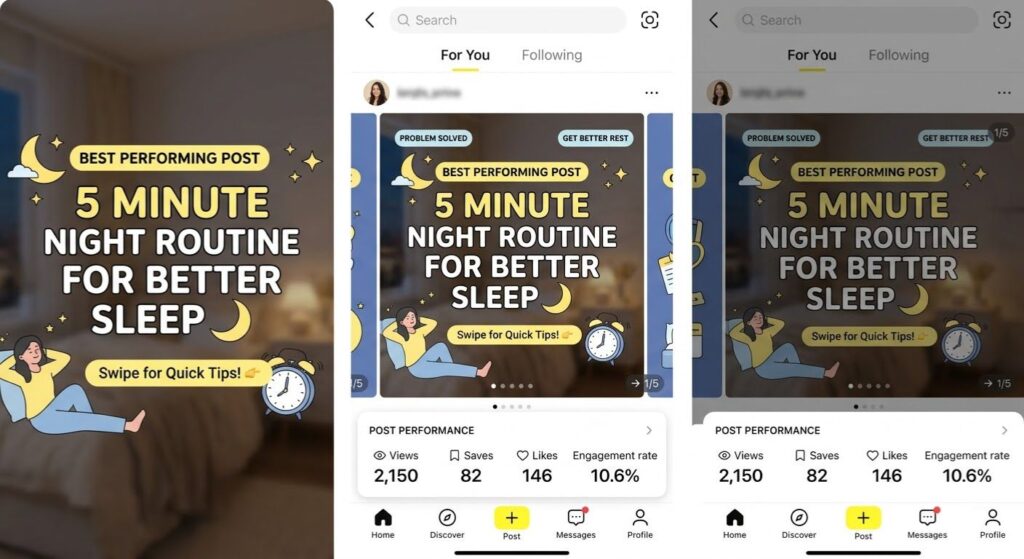
Example performance:
Views: 2,150
Saves: 82
Likes: 146
Engagement rate: 10.6%
After reviewing the post, a few reasons stood out for why it performed well.
First, the post used a carousel format with multiple slides. Carousel posts encourage users to swipe through the content, which increases engagement time.
Second, the topic solved a specific problem. Posts that provide quick tips or actionable advice often get saved by users who want to revisit them later.
Third, the design was clean and easy to read. Lemon8 is a highly visual platform, so strong formatting and attractive layouts can make a big difference.
Because of these factors, the post continued receiving views even several days after it was published.
Worst Performing Post
Not every post performed well during the experiment.
One post received noticeably lower engagement compared to the others.
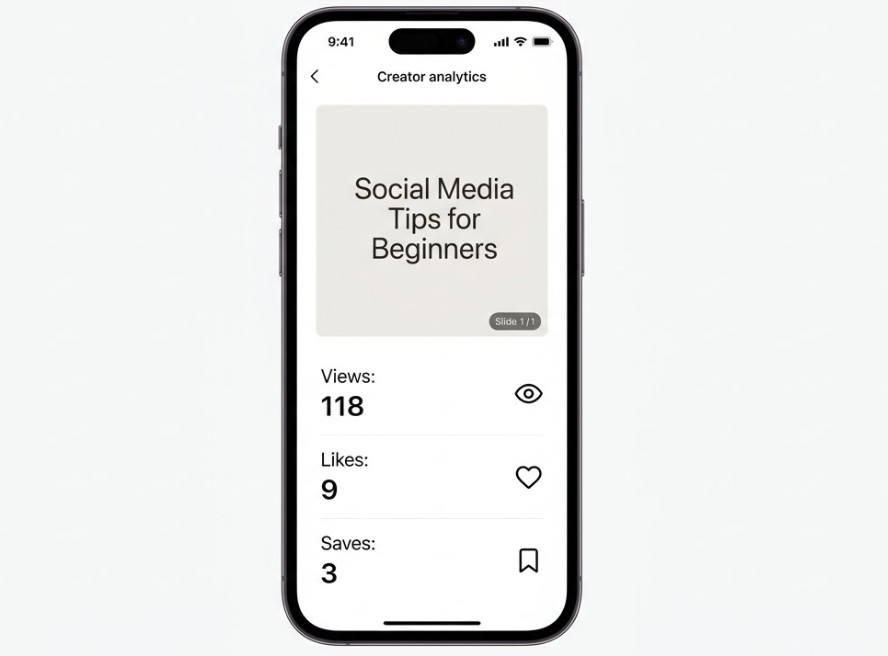
Example performance:
Views: 118
Saves: 3
Likes: 9
After reviewing the post, a few possible reasons stood out.
The design was less visually appealing compared to the other posts. Since Lemon8 focuses heavily on aesthetic content, weaker visuals can reduce the chances of users stopping to look at the post.
The topic was also too general. Posts with broad ideas often struggle to attract attention compared to posts that solve a clear and specific problem.
Finally, the caption was shorter and did not include a strong hook. Without an engaging first line, users may simply scroll past the post.
Looking at both the best and worst performing posts helped me understand what type of content Lemon8 users seem to engage with the most.
What Actually Worked on Lemon8
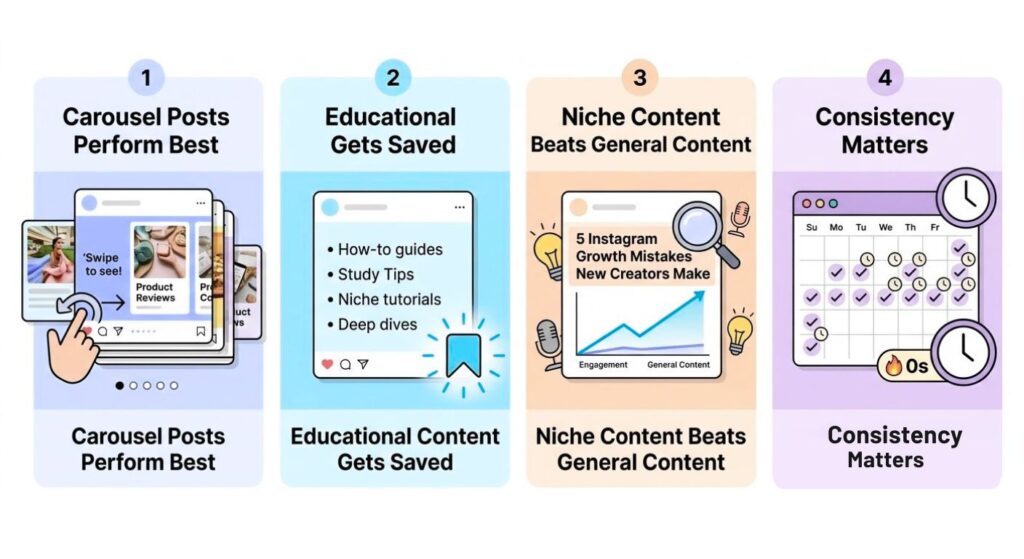
After reviewing the results from the 30 day experiment, a few clear patterns started to appear. Some types of posts consistently performed better than others. These patterns helped me understand what kind of content Lemon8 seems to reward.
Here are the biggest things that worked during the test.
1. Carousel Posts Perform Best
Carousel style posts performed better than single image posts in most cases.
These posts include multiple slides that users can swipe through. For example:
- tip lists
- step by step guides
- mini tutorials
Carousel posts encourage people to spend more time interacting with the content. Each swipe keeps the user engaged with the post for longer.
Longer engagement often sends a positive signal to the platform’s recommendation system. Many social platforms prioritize content that keeps users interacting.
Because of this, carousel posts often received more views and saves compared to simple single image posts.
2. Educational Content Gets Saved
Another pattern I noticed was that educational posts received more saves.
Examples included:
- social media tips
- step by step guides
- resource lists
Users often save these posts so they can return to them later.
This behavior makes sense because Lemon8 functions more like a discovery and inspiration platform. Many users browse the app looking for ideas they want to revisit later.
This behavior is very similar to how people use Pinterest, where saving content is a core interaction.
Because of this, posts that teach something useful tend to perform better than purely aesthetic posts.
3. Niche Content Beats General Content
Posts that focused on a specific niche performed better than very general topics.
For example:
A post titled
“5 Instagram Growth Mistakes New Creators Make”
performed better than a broad topic like
“Social Media Tips for Beginners”.
Lemon8 organizes content around interests and categories. This helps users discover posts related to topics they already enjoy.
When content targets a clear niche, the platform can match it with users who are likely to engage with it.
Because of this, niche focused content has a better chance of reaching the right audience.
4. Consistency Matters
Posting consistently also seemed to help visibility.
During the experiment I posted one time per day, which kept the account active.
When new posts appeared regularly, the account started receiving more views compared to the first few days of the test.
Many social platforms reward consistent posting because it signals that the creator is actively contributing content.
For new accounts especially, consistency may help the algorithm test your content with more users.
In simple terms, the more consistently I posted, the more opportunities the platform had to distribute the content.
These patterns helped me understand what types of posts the Lemon8 feed appears to favor. In the next section I will also share the opposite side of the experiment and explain what did not work well during the test.
What Did NOT Work
Not every post performed well during the experiment. In fact, some posts received very little engagement. Looking at these weaker posts was just as useful as analyzing the successful ones.
It helped me understand what types of content Lemon8 users are less interested in.
Here are a few things that clearly did not work well during the test.
Reposted Instagram Content
One thing I tried was reposting content that originally worked on Instagram.
I expected these posts to perform reasonably well because they had already worked on another platform. But the results were disappointing.
Most of these reposted posts received lower engagement compared to content that was designed specifically for Lemon8.
One possible reason is that Lemon8 has a slightly different content style. The platform tends to favor posts that look more like:
- aesthetic guides
- educational carousels
- lifestyle inspiration posts
Content that feels too similar to typical Instagram posts may not match the expectations of Lemon8 users.
Random Posting Times
During the experiment I occasionally posted at completely random times.
For example:
- very early morning
- late at night
These posts often received fewer views.
While this was not true for every post, it seemed like publishing during more active hours increased the chances of early engagement.
Early interaction can help a post gain momentum in recommendation feeds. Many discovery based platforms, including TikTok, often test new posts with small audiences before expanding their reach.
If the initial engagement is low, the post may stop spreading further.
Weak Captions
Another mistake I noticed was writing captions that did not have a strong opening hook.
For example, captions that started with something generic like:
“Here are some social media tips.”
These posts usually performed worse than captions that started with a clear benefit or curiosity driven hook.
Users scroll quickly through their feeds. If the first line of the caption does not catch attention, many people will simply keep scrolling.
Stronger captions that promised a specific takeaway often led to better engagement.
Generic Posts
Posts with very broad topics also struggled to perform well.
For example:
“Tips for social media growth”
This type of title is vague and does not clearly tell the reader what they will gain.
More specific posts worked better, such as:
“5 Instagram Bio Mistakes That Reduce Your Followers”
Specific topics create curiosity and communicate value immediately.
Generic content blends into the feed and is easier for users to ignore.
Overall, the posts that failed during the experiment had one thing in common. They lacked either strong visual appeal, a clear value proposition, or a specific niche focus.
Understanding these mistakes helped me refine the posting strategy for future Lemon8 content.
What I Learned About the Lemon8 Algorithm
After posting consistently for 30 days, I started noticing patterns in how posts gained views and engagement. Lemon8 does not publicly reveal all the details about how its algorithm works, but based on my experiment there were a few signals that clearly influenced visibility.
These observations helped me understand how the platform distributes content to users.
Engagement Signals Matter
One of the clearest patterns I noticed was that posts with stronger engagement continued receiving views for a longer period of time.
The engagement signals that seemed to matter most were:
- saves
- comments
- likes
Among these, saves appeared especially important.
Posts that received saves often continued getting views even after the first day. This suggests that the platform may treat saved posts as valuable content that users want to revisit.
This type of engagement driven distribution is similar to the recommendation systems used by platforms like TikTok, where early engagement helps determine whether a post is shown to more users.
If a post receives interaction quickly after being published, the platform may continue showing it to additional audiences.
Personalization Plays a Big Role
Another thing I noticed is that Lemon8 strongly personalizes content for each user.
The feed appears to adapt based on:
- topics users interact with
- categories they browse
- posts they save or like
Over time the feed becomes more tailored to specific interests.
For example, someone who interacts with fashion content will likely see more fashion related posts in their feed. A user who engages with marketing or creator tips will see more posts from those niches.
This behavior is similar to how recommendation feeds work on other discovery based platforms such as Pinterest.
Because of this, niche focused content has a better chance of reaching the right audience.
Evergreen Content Can Perform Over Time
Another interesting pattern I noticed is that some posts continued receiving views several days after being published.
This is different from platforms where content disappears quickly once the initial engagement period ends.
On Lemon8, posts that contain useful information such as:
- tutorials
- resource lists
- guides
can continue attracting engagement over time.
These types of posts are often called evergreen content because they remain useful long after they are published.
Since Lemon8 functions partly as a discovery and inspiration platform, users often search for helpful ideas and save posts for later. That means useful content can stay relevant for longer periods.
Overall, the algorithm seems to reward content that is helpful, engaging, and relevant to specific interests. The combination of engagement signals and personalized feeds plays a big role in determining which posts gain visibility.
Key Conclusions From My 30-Day Lemon8 Experiment
After reviewing all 30 posts and their performance, a few clear conclusions stood out.
First, educational carousel posts performed the best. Posts that taught something useful and used multiple slides consistently received more saves and engagement.
Second, specific niche topics worked better than general content. Posts targeting a clear idea such as “Instagram bio mistakes” attracted more attention than broad topics like “social media tips.”
Third, visual presentation matters a lot on Lemon8. Posts with clean layouts, readable text, and strong design were much more likely to stop users from scrolling.
Fourth, saves appear to be a strong engagement signal. Posts that people saved continued receiving views for longer periods compared to posts that only received likes.
Finally, consistent posting helped the account gain momentum. As the experiment progressed, newer posts started receiving more visibility than the earliest posts.
These patterns suggest that Lemon8 currently favors helpful, visually appealing, and niche focused content.
Lemon8 vs Instagram Reach
After running this experiment, one of the most interesting questions I asked myself was how Lemon8 compares with more established platforms.
Many creators naturally compare it with Instagram because both platforms focus heavily on visual content.
Based on my experience during the 30 day test, there are some clear differences in how reach works on each platform.
| Platform | Organic Reach |
| Very competitive | |
| Lemon8 | Higher discoverability |
Instagram is a mature platform with millions of creators posting every day. Because of this, it can be difficult for new accounts to get visibility without an existing audience.
Most posts on Instagram mainly reach your current followers. If you are starting from zero, growth can be slow.
Lemon8 feels different.
During the experiment, several posts received views even though the account had very few followers. This suggests the platform is actively testing new content in its discovery feed.
This type of distribution is similar to how recommendation based platforms like TikTok work, where new posts can reach users who have never seen your content before.
Because Lemon8 is still growing, the competition is also much lower compared to Instagram. That gives new creators a better chance to get visibility.
Is Lemon8 Still Worth Using in 2026?
After 30 days of posting and analyzing the results, the big question is whether Lemon8 is actually worth using in 2026.
Like most platforms, there are both advantages and limitations.
Pros
Organic reach
One of the biggest advantages is that new accounts still appear to receive organic visibility. Posts can reach users through the discovery feed even if the account has very few followers.
Low competition
Compared to platforms like Instagram, the number of creators posting regularly on Lemon8 is still relatively small. This creates opportunities for early adopters.
Strong niche communities
The platform organizes content around interests such as fashion, travel, beauty, food, and creator tips. This helps niche creators reach audiences who are already interested in those topics.
Cons
Smaller user base
Lemon8 is still much smaller than platforms like Instagram or Pinterest. While the platform is growing, the total audience size is currently limited.
Unclear monetization
Another uncertainty is monetization. Unlike some social platforms, Lemon8 does not yet have widely established ways for creators to earn money directly through the app.
Creators may still need to rely on indirect methods such as brand partnerships, affiliate marketing, or driving traffic to other platforms.
Overall, Lemon8 feels like a platform that is still in its early growth stage. For creators who enjoy producing visual and educational content, it can be an interesting place to experiment while competition is still relatively low.
Final Verdict After 30 Days
After posting consistently for 30 days, my overall conclusion is simple.
Lemon8 still offers real organic reach in 2026.
Even with a brand new account and zero followers, several posts were able to receive views through the platform’s discovery feed. That alone makes the platform interesting for creators who are struggling to get visibility on more competitive networks.
The experience feels different from mature platforms like Instagram where new accounts often struggle to reach people outside their follower base.
Lemon8 appears to be in an earlier stage of platform growth. That means the algorithm is still actively distributing content from new creators to find engaging posts.
However, the platform will not work equally well for everyone.
Creators who may benefit from Lemon8 include:
- lifestyle creators
- fashion and beauty creators
- travel bloggers
- food content creators
- educational content creators
- people who enjoy making carousel style guides
These types of posts fit naturally with the visual discovery experience of the platform.
On the other hand, some creators may find less value in Lemon8.
Creators who may not benefit as much include:
- creators focused only on short form video
- creators looking for fast monetization
- brands that need very large audiences immediately
Because the platform is still smaller than networks like TikTok or Instagram, it may take time for it to mature.
That said, platforms in their early stage often offer the best growth opportunities for early adopters.
For creators who enjoy experimenting with new platforms, Lemon8 is definitely worth testing.
Actionable Tips for New Creators
If you are thinking about starting on Lemon8, here are a few practical tips based on what worked during my experiment.
Post carousel style content
Carousel posts encourage users to swipe through multiple slides. This increases engagement and time spent on the post.
Focus on niche topics
Specific topics perform better than broad ones. Posts that solve a clear problem or share a specific idea attract more engagement.
Write strong captions
Start captions with a clear hook that explains what the user will gain from reading the post.
Use hashtags strategically
Relevant hashtags can help the platform understand what your content is about and show it to the right audience.
Post consistently
Consistency gives the platform more opportunities to distribute your content to new users.
Next Experiments
This 30 day experiment answered some important questions, but it also raised several new ones.
In the next articles, I plan to explore Lemon8 in more detail.
Some of the experiments and topics I will be covering include:
- How the Lemon8 Algorithm Actually Works
- 20 Lemon8 Post Ideas That Actually Get Engagement
- Best Time to Post on Lemon8
- Lemon8 vs Instagram Reach
These articles will expand on the insights from this experiment and help creators understand how to grow on the platform more effectively.
