

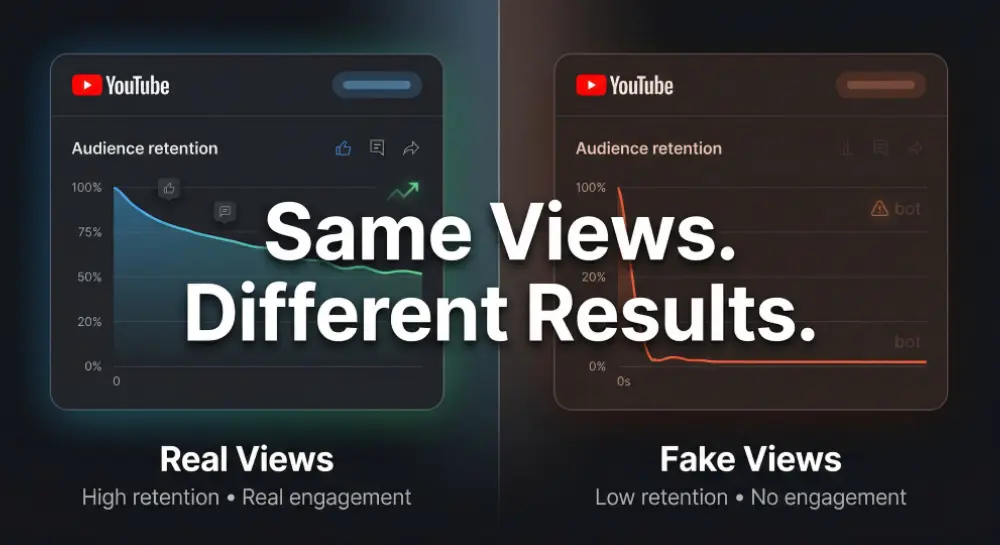
If you think all YouTube views are equal, you are already at a disadvantage.
Most people focus on the number. More views should mean better performance, right? That assumption is where things start going wrong.
Because not all views are the same.
There is a real difference between real YouTube views and fake ones, and that difference directly affects how your video performs.
In this guide, we will break down real vs fake YouTube views in a practical way. No theory. No fluff. Just what actually happens when you rely on each type.
We will look at how they impact retention, what risks are involved, and how the algorithm responds behind the scenes. This is where most creators get misled, and it is also why videos stop growing even after getting views.
By the end, you will know which type of views actually supports growth and which one quietly works against it.
Before we get into the details, you need to understand one thing.
A view only matters if someone actually watches.
What matters is what people do after they click. Whether they stay, how long they watch, and if they engage at all.
This is exactly where real and fake views start to separate.
What is the difference between real and fake YouTube views?
Real YouTube views come from actual users who watch and engage with your content. Fake views come from bots or low-quality sources that do not show real viewing behavior.
What Are Real vs Fake YouTube Views?
Before comparing anything, you need to understand what these views actually mean.
Not every view works the same way. Two videos can have the same number of views but perform very differently depending on how people watch them.
What are real YouTube views?
Real YouTube views come from actual people choosing to watch your video.
These viewers do not just click and leave. They stay on the video for a while, watch different parts of it, and sometimes watch till the end. Some of them also like, comment, or share the video.
Their activity looks normal because it is normal. They find your video through search, suggested videos, or their homepage feed, just like any regular viewer.
This is exactly why optimizing your content matters. Here is a simple YouTube SEO checklist for beginners to help your videos get discovered.
When this happens, YouTube sees that people are genuinely watching your content. That tells the platform your video is worth showing to more users.
That is how real views help your video reach a larger audience.
Fake YouTube Views
Fake YouTube views usually come from bots or low-quality networks, not real people.
On the surface, your view count goes up. But the behavior behind those views tells a different story.
These views often last only a few seconds. There is no real watching, no interaction, and no genuine interest in your content.
You will not see meaningful likes, comments, or shares. And the traffic itself does not look natural. It may come in sudden spikes or from unusual sources that do not match how real viewers behave.
When YouTube sees this kind of activity, it does not treat it as normal growth. It sees it as low-quality or suspicious traffic.
That is why fake views do not help your video. In many cases, they send the wrong signals and limit how far your content can go.
1. Retention Difference (This Is What Actually Matters)
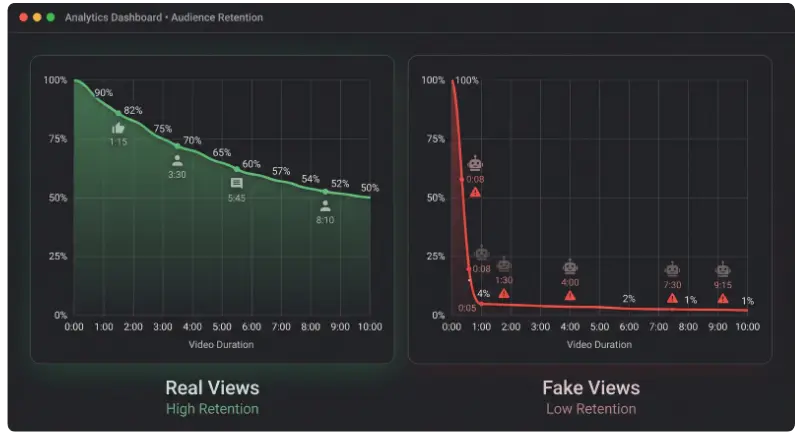
This is where the real difference shows up.
Most people look at views and think higher numbers mean better performance. But YouTube does not judge a video based on how many people clicked. It looks at what those people did after clicking.
Did they stay and watch?
Or did they leave almost immediately?
That one difference changes everything.
Real Views
When your views come from real people, they behave like normal viewers.
They do not all watch the full video, but they spend time on it. Some watch halfway, some watch till the end, some skip to parts they find interesting. Overall, they stay long enough to show that the content is worth watching.
For a decent video, this usually results in around 40% to 70% average watch time.
This tells YouTube something important. People are not just clicking your video, they are actually watching it. That increases your average view duration and gives the algorithm a reason to push your video to more users.
Fake Views
Fake views create the opposite pattern.
They might increase your view count, but they do not behave like real viewers at all. Most of them drop off within a few seconds. In many cases, they leave within 1 to 5 seconds without watching anything meaningful.
This leads to extremely low retention, sometimes even below 5%.
From YouTube’s perspective, this looks like a bad video. People are clicking, but not staying. There is no real interest, just quick exits.
What This Looks Like in Practice
A video gets 10,000 views overnight. Sounds great. But retention drops to 3 percent. Within days, impressions fall and the video stops getting recommended.
The numbers went up, but the video stopped growing.
Why This Matters
Think about your own behavior for a second.
You click a video. If it holds your attention, you keep watching. If it feels boring or misleading, you leave within a few seconds.
That is exactly what YouTube is tracking at scale.
When people stay on your video, it is a strong signal that the content is doing its job. When people leave quickly, it tells YouTube something is off.
And YouTube reacts to that.
If viewers are watching for longer, your video gets shown to more people through suggestions and recommendations. That is how growth starts picking up.
But if most viewers drop off early, your video slowly stops getting pushed. Fewer impressions, fewer clicks, and eventually it just sits there without growing.
This is why retention is not just a number in analytics. It directly affects how far your video can go.
2. Risk Difference (Where Most People Get Burned)
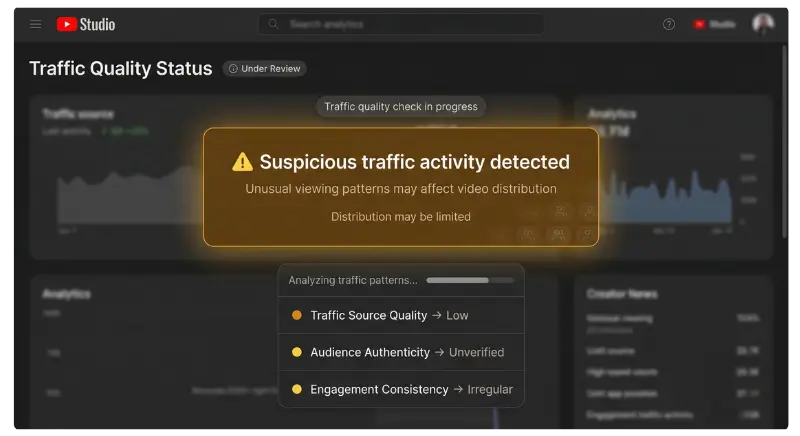
This is where most people make the wrong call.
They assume all paid views carry the same level of risk. They don’t.
Some types of views can support your growth if done right. Others can quietly damage your channel.
Fake views fall into the second category.
Risk with Fake YouTube Views
Fake views do not behave like real users, and YouTube is very good at spotting that.
When a video suddenly gets a spike in low-quality traffic with almost no watch time or engagement, it raises a red flag. The platform regularly checks for this kind of activity.
One common outcome is that those views get removed. You might see your numbers go up for a while, and then drop later when YouTube cleans them up.
In more serious cases, it can affect your channel performance. Videos stop getting pushed, reach drops, and monetization can take a hit if the traffic looks unreliable.
Some creators have seen strong initial spikes followed by a sharp decline, and it takes time to recover because the algorithm becomes more cautious with that content.
Real Views (High-Quality Traffic)
Real or high-quality views behave much closer to normal audience activity.
They come in gradually, not in unnatural spikes. Viewers spend time on the video, and some level of interaction is usually present.
Timing also plays a role in how your video gains traction. Posting at the best time to post on YouTube can improve early performance signals.
Because of this, the traffic does not look suspicious. It blends in with organic behavior, which reduces the chances of detection or penalties.
More importantly, it supports the kind of signals YouTube is actually looking for, like watch time and engagement.
The Key Difference
Fake views try to force numbers.
Real views support how your video would naturally grow.
One creates artificial activity that YouTube can flag. The other aligns with how the platform expects real viewers to behave.
3. Algorithm Impact (This Decides Everything)
At the end of the day, YouTube is not impressed by view counts.
It is trying to figure out one thing. Are people actually enjoying this video?
That is why the platform focuses on behavior, not just numbers.
What the algorithm actually looks at
When someone watches your video, YouTube tracks a few key signals:
- How long they stay on the video
- Where they drop off
- Whether they click in the first place
- If they like, comment, or interact
- Whether they continue watching more videos after yours
All of this helps YouTube decide if your content should be shown to more people.
What happens with real views
When your views come from real people, the data looks healthy.
People stay longer, some interact, and overall the video performs like normal content should. That gives YouTube confidence to push it further.
So your video gets shown to more users. More users click, more people watch, and the cycle continues.
This is how videos grow beyond your initial audience.
What happens with fake views
Fake views break this pattern.
You might see a spike in views, but the behavior behind those views does not match. People are not staying, not engaging, and not behaving like real viewers.
That mismatch is easy for YouTube to spot.
When that happens, the platform slows down distribution. Your video stops appearing in suggestions, impressions drop, and growth fades out without any clear warning.
What YouTube also notices
Apart from watch behavior, YouTube also looks at traffic patterns.
If views come in sudden bursts, from unusual locations, or in ways that do not match normal viewing habits, it raises suspicion.
These patterns do not help your video. In most cases, they make the algorithm more cautious about promoting it.
This is why the source and quality of your views matter.
Not because of the number you see on the screen, but because of how those views behave once they arrive.
Hidden Problem: Fake Views Get Removed Anyway
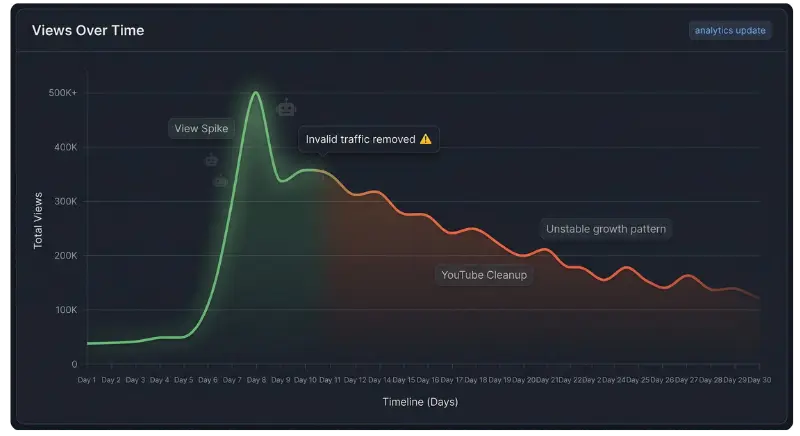
Most providers do not highlight this clearly because it makes their service look unreliable.
Fake views are not always permanent.
You might see your numbers increase after buying views, and for a short time everything looks fine. But YouTube does not just accept every view at face value. It reviews traffic quality in the background.
When it detects views that do not behave like real human activity, it removes them.
This does not always happen immediately. Sometimes the drop comes later, which makes it more confusing. From your side, it looks like your video suddenly lost views for no clear reason.
What is actually happening is simple. The platform is filtering out traffic it does not trust.
The bigger issue is not just the drop in numbers.
It is the pattern your video creates.
A sudden spike followed by a decline does not look like normal growth. It makes performance unstable, and that reduces the chances of your video being pushed further.
Instead of building momentum, you end up losing it.
Real vs Fake Views (Quick Comparison)
Here is a simple way to look at the difference side by side:
| Factor | Real Views | Fake Views |
| Source | Real people watching your video | Bots or low-quality traffic sources |
| Watch Time | Viewers spend time watching | Most leave within seconds |
| Retention | Steady and healthy | Very low |
| Engagement | Likes, comments, shares possible | Almost none |
| Algorithm Impact | Helps distribution | Limits reach |
| Risk Level | Lower when done properly | High |
| Long-term Growth | Possible and sustainable | Very unlikely |
If you look closely, the difference is not in the number. It is in how those views behave. And that is exactly what YouTube rewards. And that behavior is exactly what determines whether your video grows or gets ignored.
How to Increase YouTube Views Safely Using Real Promotion Methods
At this point, the difference is clear. The problem is not getting more views. The problem is how those views are generated.
If the traffic is artificial, it hurts your video.
If the traffic behaves like real viewers, it helps your video grow.
Instead of relying on bots or low-quality networks, some growth strategies use actual advertising systems like YouTube ads to bring viewers to your content. These are real users who see your video as an ad and choose to watch it.
That changes everything, because now the behavior behind the view is real. People can watch, skip, engage, or continue watching just like any normal viewer. From YouTube’s perspective, this looks like natural audience activity, not manipulation.
And that is exactly what the algorithm responds to.
When done correctly, this kind of promotion does not create unnatural spikes or suspicious patterns. The traffic comes in gradually, retention stays stable, and your video gets a better chance of being picked up by recommendations.
This is very different from fake views.
Fake views try to inflate numbers.
Real promotion focuses on viewer behavior.
If you are planning to invest in views, this distinction matters more than anything else.
That is also why modern YouTube views services are shifting toward ad-based delivery instead of bot-driven traffic. The goal is not just to increase views, but to support how your video performs after those views arrive.
The Truth Most People Won’t Tell You
Fake views are not harmless.
They do not just sit there as extra numbers. They directly affect how your video performs after that.
When a large portion of your views leave within a few seconds, your retention drops. Once that happens, YouTube starts losing confidence in your content. It assumes viewers are not finding the video useful or engaging.
As a result, your video gets shown to fewer people. Impressions decline, recommendations slow down, and your organic reach takes a hit.
So the real problem is not just wasted money. It is the damage these views can cause to your video’s future performance.
So… Do Real Paid Views Actually Work?
Buying views is not the problem. Buying the wrong kind is.
They can work, but only when the behavior behind those views looks natural.
If people spend time watching your video, move through it like normal viewers, and show some level of engagement, then those views support your content instead of hurting it.
This usually means the views are delivered gradually, not in sudden spikes, and come from an audience that matches your content.
When this happens, your video starts with better signals. YouTube sees that people are watching and staying, which increases the chances of it being recommended to more users.
If you are going to invest in views, the quality matters more than the quantity. The wrong choice can hold your channel back. The right one can give your video the push it needs to grow.
If you want a deeper breakdown of how organic and paid strategies compare, check out this detailed guide on organic vs paid YouTube views.
Final Verdict
Fake views increase your numbers, but they work against your growth. In many cases, they weaken it.
Real views, when they come with proper watch behavior, support how your video is evaluated by the algorithm.
The difference comes down to what happens after the click.
One leads to low retention and reduced reach.
The other helps your video gain traction and grow over time.
Also read: How to Get YouTube Views Fast (Free + Paid Methods That Actually Work in 2026)
FAQs
Is it illegal to buy YouTube views?
No, but low-quality or bot views can violate YouTube policies.
Can fake views get removed?
Yes, YouTube regularly removes invalid traffic.
Do real paid views help videos grow?
They can, if they generate real watch behavior and engagement.
