

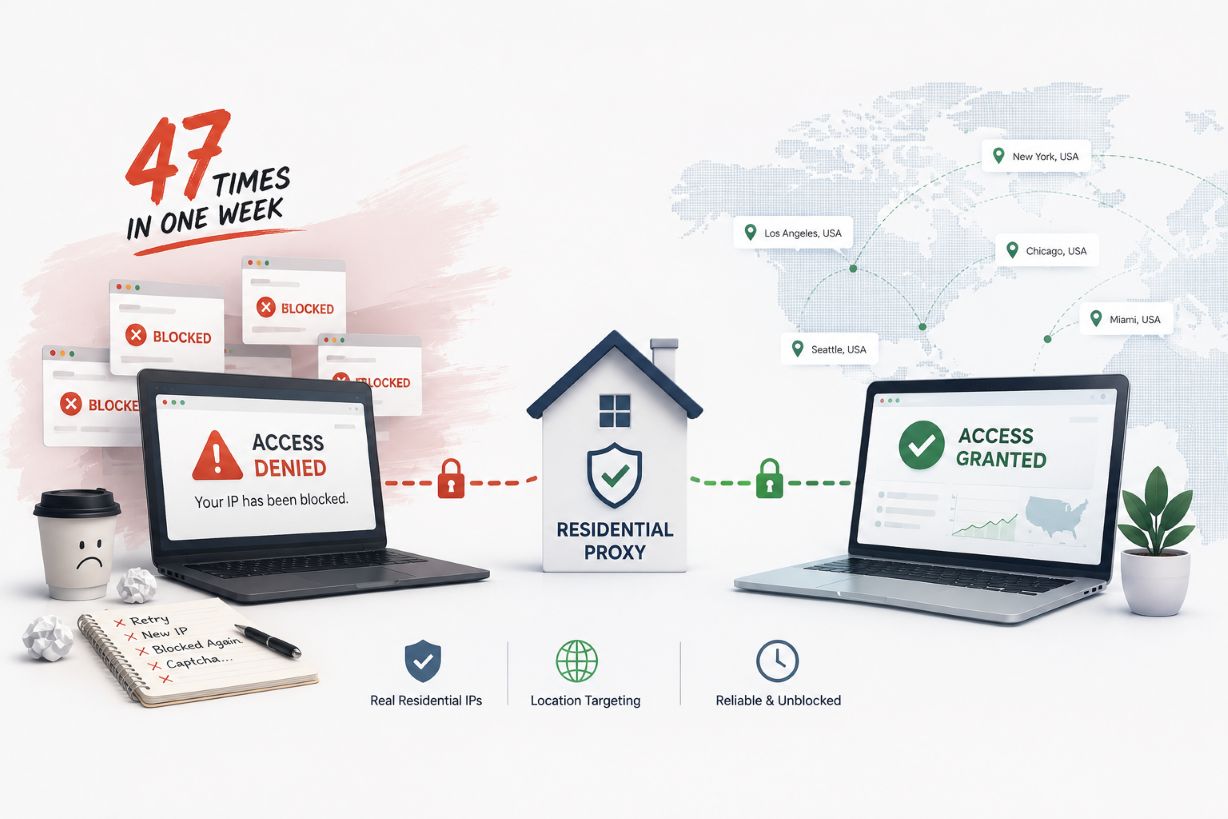
I didn’t wake up one morning thinking about proxy servers. But after getting IP-banned from a competitor research tool for the 47th time in 6 days, something had to change.
You’re probably wondering what I was doing wrong. Nothing, actually. Just collecting publicly available pricing data for a client’s market analysis project. But doing anything at scale online makes you look like a bot, and websites really hate bots.
Also read: Claude Design Is Impressive. But Stop Acting Like Humans Are Obsolete.
My Breaking Point Was Embarrassing
Picture this. 2:47pm on a Tuesday, I’m screen-sharing with a client, trying to demonstrate how I track their competitors’ pricing strategies. I load the first website and immediately get blocked, then the second one, and by the third attempt I’m literally sweating and making excuses about “technical difficulties.”
That night I researched why this kept happening. When you send dozens of requests from the same IP address, security systems flag you automatically without caring if you’re a legitimate researcher or an actual threat.
I had two options. Give up on data collection entirely (not happening) or find a workaround that didn’t involve manually changing my network connection every 12 minutes.
What Actually Changed Everything
After reading probably 20 different Reddit threads and tech forums, I kept seeing the same recommendation. People doing web scraping, market research, and competitive analysis were saying you need residential IPs, not datacenter ones.
When you buy residential proxy services, you’re routing your requests through real residential IP addresses that look exactly like a regular person browsing from home because they basically are.
Datacenter proxies are cheap but obvious. Websites can spot them instantly because they come from hosting providers, not internet service providers.
The Difference Was Immediate
My success rate went from 23% to over 95% within the first day. Suddenly I could access the same competitor websites 30 times in an hour without triggering any alarms.
Speed actually improved too. I thought adding a proxy layer would slow everything down. Wrong. Because I wasn’t constantly hitting rate limits and solving CAPTCHAs, my data collection time dropped from 6 hours to about 90 minutes for the same dataset.
Most residential proxy providers give you a simple dashboard where you pick your location, grab your credentials, and paste them into whatever tool you’re using.
What I Wish I’d Known Earlier
Location targeting actually matters more than I thought. When researching US-based competitors, using US residential IPs made a massive difference because some websites serve different content based on your geographic location.
Rotating vs. sticky sessions is something you’ll need to understand. Rotating means you get a new IP with each request, while sticky means you keep the same IP for a set time period. I use rotating for most scraping projects and sticky when I need to maintain a session.
Not all residential proxies are created equal. Some providers have tiny pools of recycled IPs that websites have already flagged, while others have millions of fresh IPs that look completely legitimate. I learned this the hard way after my first cheap provider got me blocked again within 48 hours.
How I Actually Use Them Now
My workflow changed completely once I figured out the right setup. Now I can run automated price monitoring scripts that check 200+ competitor products every morning, test how our company website performs from different US cities without traveling, and verify that our ads display correctly in specific regions.
But honestly, the best part is just not worrying anymore about getting blocked. No more IP bans interrupting my workflow. No more embarrassing client calls where I can’t demonstrate basic features. No more wasting half my workday solving CAPTCHA puzzles about traffic lights and crosswalks.
So if you’re doing any kind of web research, testing, or data collection at scale, you’ll eventually hit the same wall I did. Save yourself the headache and figure out your proxy situation before you’re explaining to your boss why you can’t access basic competitor information anymore.
