

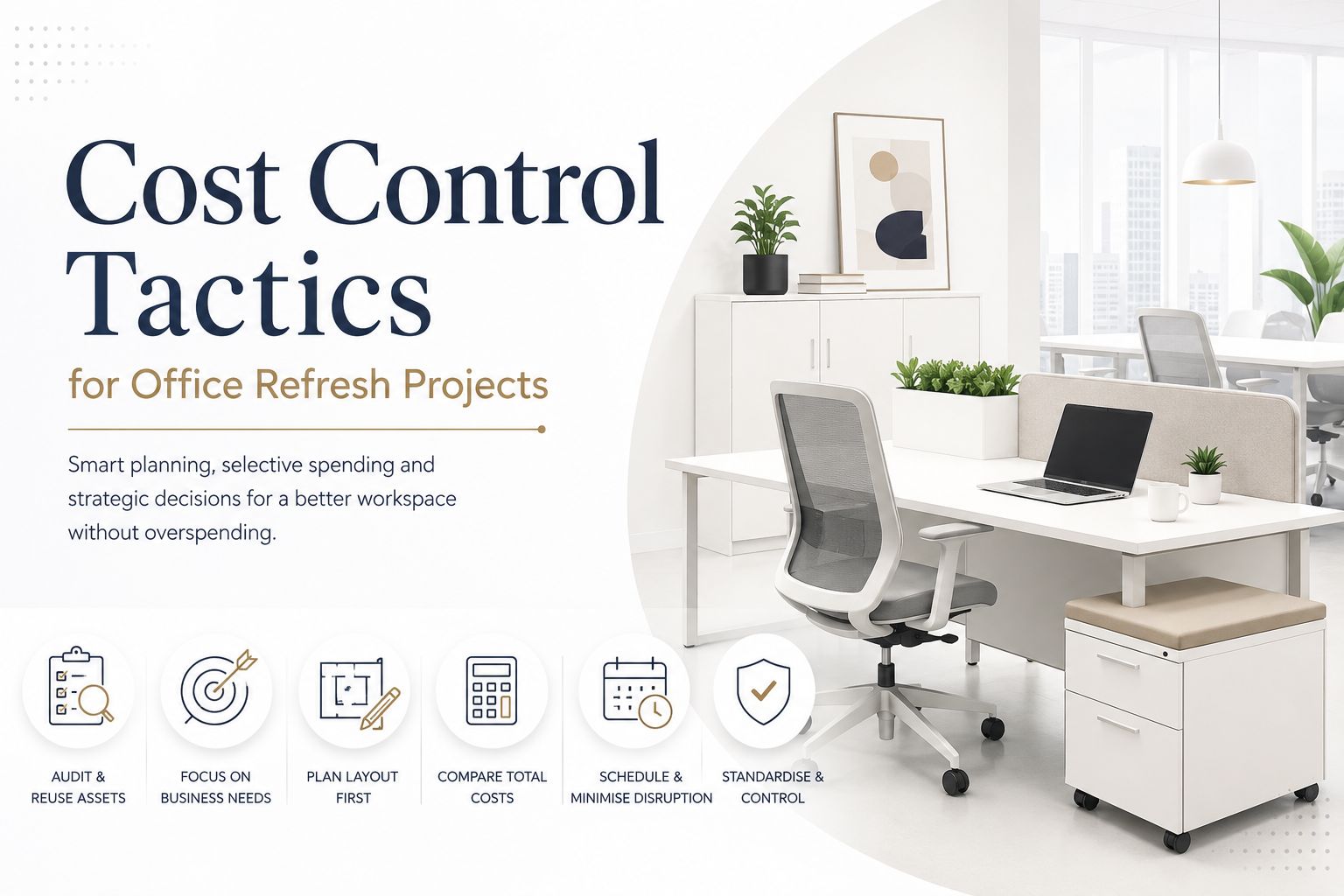
An office refresh can improve comfort, functionality and presentation without becoming a full-scale renovation. Costs can still rise quickly when furniture, trades, technology and disposal are planned separately. Strong cost control starts with clear priorities, accurate measurements and a willingness to retain assets that continue to meet practical workplace needs.
Combine Reuse With Selective Replacement
Begin with an asset audit covering desks, chairs, storage units, tables and partitions. Record each item’s condition, dimensions and suitability for the proposed layout. Furniture that remains safe and functional can be cleaned, repaired or relocated, while only unsuitable pieces are marked for replacement. This prevents a refresh from becoming an unnecessary office-wide refit.
When replacements are necessary, the second-hand market can provide suitable pieces without the cost of buying everything new. Options range from local resellers to workspace furniture providers such as FIL Furniture used office furniture solutions in New Zealand. Compare items by condition, dimensions, delivery charges and compatibility with retained furniture, as the lowest purchase price will not always represent the best overall value.
Set Priorities Around Business Needs
Separate essential improvements from cosmetic preferences before requesting quotations. Essential work might include replacing unsafe seating, increasing storage, creating additional workstations or correcting an inefficient layout. Decorative changes, premium finishes and non-essential accessories should remain secondary until the core requirements have been properly costed.
A clear scope of works helps prevent expenses from expanding during the project. It should identify the areas included, assets being retained and the expected standard of finish. Proposed additions can then be assessed against an agreed business need instead of being approved as isolated purchases.
Also read: How Mobile Apps Are Transforming Digital Marketing for Real Estate Businesses
Plan the Layout Before Purchasing
Accurate space planning prevents businesses from buying furniture that is too large, unnecessary or difficult to position. Measure the usable floor area and account for doors, columns, power points, windows and circulation routes. Workstations must accommodate the required number of employees without obstructing movement or access to shared facilities.
Test furniture quantities against the proposed layout before committing funds. This may show that fewer flexible workstations can meet demand, particularly where hybrid working applies. It can also reveal opportunities to relocate existing storage, meeting tables or partitions instead of purchasing replacements.
Compare Complete Project Costs
The lowest item price does not necessarily produce the lowest final bill. Evaluate delivery, assembly, installation, removal and potential repair charges alongside the purchase price. This broader calculation, known as the total cost of ownership, provides a more reliable basis for comparing new, second-hand and refurbished options.
Request quotations based on the same specifications and service requirements. If one price includes delivery and another excludes it, adjust the figures before comparing them. Include a modest contingency budget for concealed damage, access complications or minor layout changes, but require approval before it is used.
Schedule Work to Limit Disruption
Poor scheduling can create costs that never appear in a furniture quotation. Employees may lose productive time when work areas are unavailable, while badly timed deliveries can result in temporary storage and additional handling charges. Phased installation allows part of the office to remain operational wherever practical.
Coordinate furniture delivery with electrical, cabling, flooring and decorating work. Desks should not arrive before disruptive building tasks are complete, and technology teams need enough time to reconnect equipment. A clear sequence reduces repeated handling and protects both retained and newly acquired furniture.
Standardise Purchasing Decisions
Nominate one person to approve purchases, substitutions and changes to the agreed scope. Without central control, different teams may duplicate orders, select incompatible items or request finishes that add cost without improving functionality. A basic change-control process creates accountability by recording the reason and price of each alteration.
Limiting the number of desk sizes, chair types and storage formats can also simplify purchasing and future replacement. Standardisation should remain flexible enough to accommodate accessibility requirements and employees who need specialised furniture.
Building Value Into Every Decision
Controlling an office refresh budget does not mean selecting the cheapest item at every stage. It means retaining useful assets, purchasing only to address verified gaps and accounting for delivery, installation and disruption before work begins. With disciplined planning and consistent approval, businesses can create a more functional workplace without funding unnecessary replacements or avoidable project costs.
