

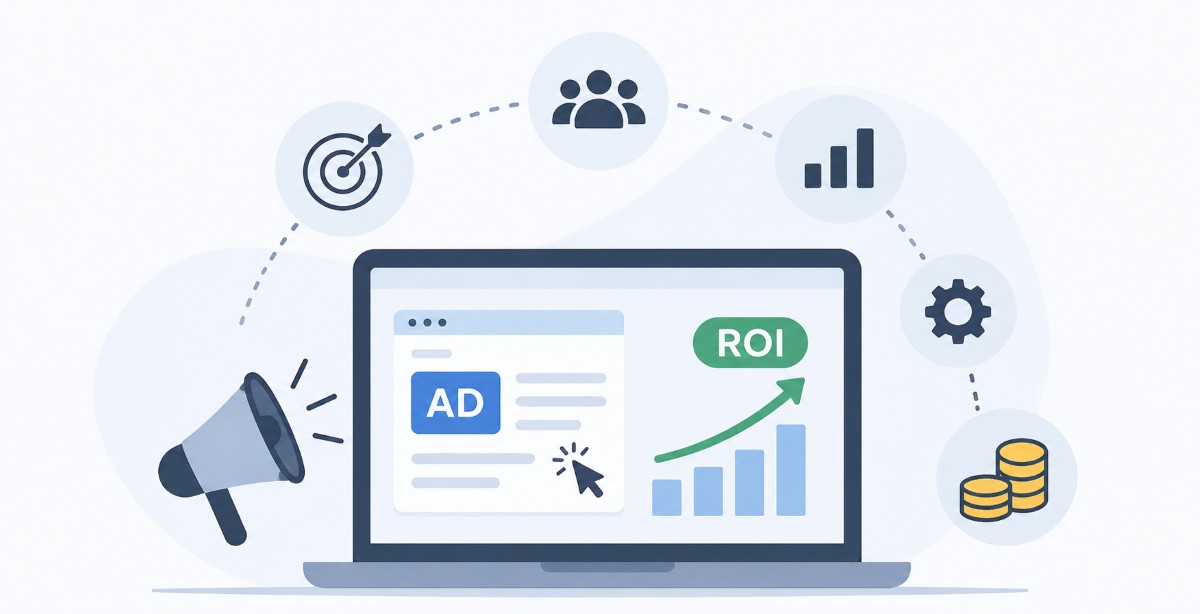
Digital advertising has evolved into one of the strongest engines of business growth in the modern marketplace. Companies now dedicate significant budgets to online campaigns across search engines, social media platforms, email marketing, websites, streaming services, and mobile applications to connect with digitally active audiences. Yet, investing in ads alone is no longer enough. Businesses expect campaigns to generate measurable results, sustainable expansion, and clear profitability.
This is why Return on Investment (ROI) plays such an important role. In digital marketing, ROI measures how efficiently advertising spending is converted into revenue, leads, sales, and long-term customer value. As companies face increasing pressure to justify marketing expenses, understanding the factors that influence ROI has become essential for building successful strategies.
Today’s digital campaigns are driven by analytics, personalization, automation, consumer insights, and ongoing optimization. Brands that effectively use these elements are better positioned to strengthen campaign performance, minimize wasted budget, and maximize returns across every marketing channel.
What does ROI mean in marketing?
Marketing ROI, commonly referred to as MROI, measures the value a company gains from its marketing investments. It compares the revenue or profit generated from marketing efforts against the amount spent on those campaigns.
ROI applies across nearly every form of digital marketing, including:
- Search engine marketing
- Social media advertising
- Email campaigns
- Content marketing
- Video advertising
- Display advertising
- Influencer partnerships
- Affiliate marketing
- Mobile advertising
Businesses rely on ROI calculations to evaluate campaign profitability and determine whether marketing activities support larger business goals.
One major advantage of digital advertising is access to detailed analytics, real-time reporting, and attribution tracking, all of which make ROI measurement more accurate and actionable.
Why marketing ROI is more important than ever
The online marketplace has become increasingly competitive. Consumers encounter countless brands every day across multiple devices and digital channels. Because of this complexity, businesses need accurate insights into which campaigns are delivering results and which are underperforming.
Marketing ROI helps businesses:
- Measure campaign performance
- Understand customer behavior
- Improve advertising efficiency
- Allocate budgets more strategically
- Reduce unnecessary expenses
- Increase profitability
- Justify marketing spending
- Scale successful campaigns more effectively
For small and midsize businesses in particular, ROI tracking is critical because marketing budgets are often limited. Every dollar spent needs to produce measurable impact.
When companies identify the campaigns delivering the strongest returns, they can confidently invest more into successful strategies while cutting back on ineffective efforts.
Key factors that drive ROI in modern digital advertising
Several major elements shape ROI in today’s advertising environment. Businesses that optimize these areas are more likely to improve campaign performance and increase profitability.
Audience targeting and personalization
One of the most powerful drivers of ROI is precise audience targeting. Modern consumers expect personalized experiences, and broad, generic advertising often struggles to gain attention.
Digital advertising platforms now allow businesses to target users based on:
- Demographics
- Interests
- Online activity
- Purchase behavior
- Geographic location
- Device preferences
- Search intent
- Customer lifecycle stage
Personalized marketing generally produces stronger engagement, higher conversion rates, and better customer relationships.
For example, a customer who abandons an online shopping cart is more likely to respond to a personalized retargeting ad than a generic brand message. Likewise, customized email campaigns often generate better click-through rates and conversions.
The more relevant an advertisement feels to the consumer, the greater the chance of conversion.
Data-driven decision making
Modern digital marketing depends heavily on data analysis. Businesses that rely on accurate campaign data are more likely to improve ROI consistently over time.
Important marketing metrics include:
- Click-through rate (CTR)
- Cost per click (CPC)
- Conversion rate
- Customer acquisition cost (CAC)
- Return on ad spend (ROAS)
- Engagement rate
- Bounce rate
- Customer lifetime value (CLV)
By studying these metrics, marketers can identify strengths, uncover weaknesses, and make smarter campaign decisions.
Data-driven marketing allows businesses to:
- Adjust budgets in real time
- Optimize low-performing ads
- Refine audience targeting
- Identify profitable channels
- Predict customer behavior
- Improve customer experiences
Advanced analytics tools and customer experience platforms now provide marketers with deeper insights than ever before.
High-quality creative content
Creative quality has a direct impact on advertising ROI. Consumers are constantly exposed to digital content, making it harder for brands to stand out.
Successful campaigns often feature:
- Eye-catching visuals
- Strong headlines
- Engaging video content
- Clear calls to action
- Interactive ad formats
- Emotion-driven storytelling
- Mobile-optimized designs
Strong creative content boosts engagement and encourages conversions.
Video marketing has become especially effective in recent years. Short-form videos, livestreams, and interactive content frequently outperform static ads in terms of engagement.
Brands that consistently create relevant and valuable content often build stronger trust and customer loyalty over time.
Multi-channel advertising strategies
Consumers rarely interact with brands through just one platform. A customer journey may involve:
- Discovering a product on social media
- Researching it through Google
- Reading online reviews
- Receiving promotional emails
- Seeing retargeting ads
- Completing a purchase through a mobile app
Because buying journeys are increasingly fragmented, businesses must adopt multi-channel marketing strategies.
Cross-channel marketing ensures customers receive consistent messaging across all platforms. This consistency improves brand recognition and increases conversion opportunities.
Effective multi-channel campaigns often combine:
- Search advertising
- Social media marketing
- Email campaigns
- Influencer collaborations
- Video advertising
- Content marketing
- Mobile advertising
Businesses that align campaigns across multiple channels often achieve stronger ROI because they engage customers throughout the entire decision-making process.
Marketing automation and artificial intelligence
Automation and artificial intelligence are reshaping digital advertising. AI-powered tools help businesses improve efficiency, optimize campaigns, and deliver more personalized experiences.
Marketing automation can improve ROI by:
- Automating email workflows
- Personalizing customer interactions
- Optimizing ad placements
- Managing bids automatically
- Predicting customer actions
- Identifying valuable audiences
- Strengthening lead nurturing
AI-driven platforms can process enormous amounts of data quickly and make real-time adjustments that improve campaign outcomes.
Automation also reduces repetitive manual tasks, giving marketing teams more time to focus on strategy, creativity, and long-term growth.
Conclusion
ROI continues to be one of the most critical measures of success in modern digital advertising. In an increasingly competitive online environment, businesses must ensure every advertising investment creates meaningful results.
Today’s advertising ROI is influenced by a combination of factors, including audience targeting, personalization, data analytics, creative quality, customer experience, automation, mobile optimization, and continuous testing.
Companies that embrace data-driven strategies and prioritize exceptional customer experiences are more likely to achieve stronger engagement, higher conversion rates, and sustainable profitability.
As digital advertising continues to evolve, businesses that remain adaptable, innovative, and focused on performance measurement will gain a stronger competitive edge and maximize the value of every marketing investment.
