

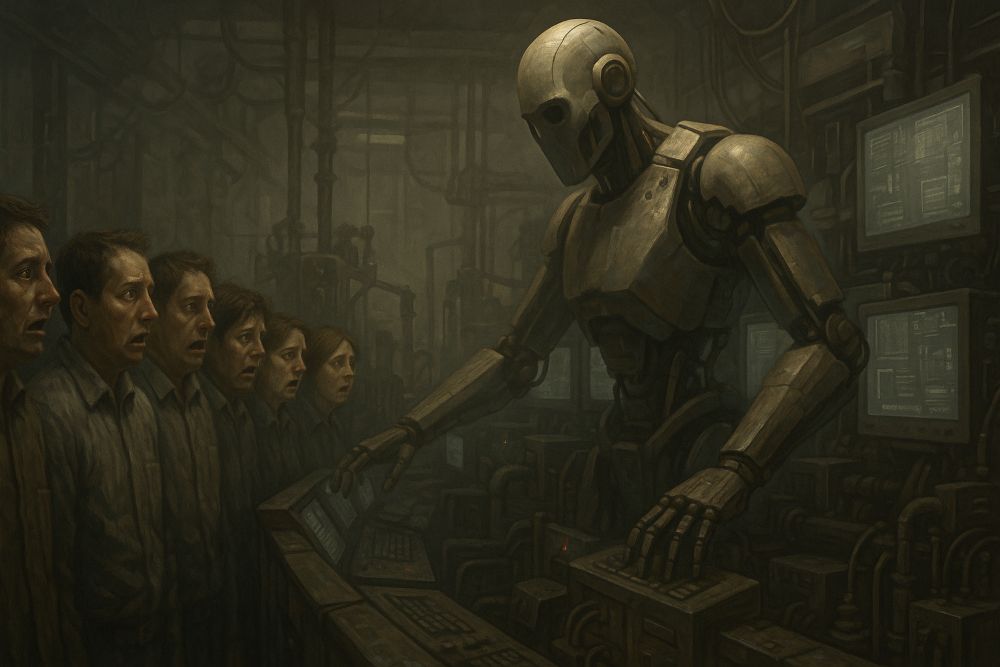
Some days it feels like we’re witnessing a once-in-a-century breakthrough. Other days it feels suspiciously like history repeating itself, only this time the websites have been replaced with chatbots promising to “automate your entire life.”
If you don’t remember the dot-com era, in the late 1990s, every company slapped “.com” at the end of its name and investors threw money at them even if they had no customers, no profits, and sometimes not even a real product. Stock prices shot up based on pure optimism. Then reality arrived. Many of those companies collapsed almost overnight, wiping out billions and leaving people wondering how they ever believed the hype.
Sound familiar yet?
Today we’re watching something similar unfold. Millions of people have already lost their jobs or seen their roles shrink. Yet every second startup still insists it will “change the world with AI,” even if their entire product is basically a thin layer of UI sitting on top of someone else’s model. You scroll through funding announcements and suddenly everything is “AI-powered,” as if adding those two letters magically solves a real problem.
Why AI Looks Bubble-Like Right Now
The signs aren’t subtle. You don’t need an economics degree to feel that something about this wave is… off.
Start with the valuations. We’re watching startups worth billions even though they barely have paying customers. Some don’t have a real business model yet. Their entire pitch is “AI will figure it out later,” which sounds less like strategy and more like wishful thinking wearing a hoodie.
Then there’s the explosion of tools built directly on top of someone else’s AI engine. You know the kind: a small feature wrapped in a shiny interface, marketed as the future of work. But if the underlying AI provider changes one policy, raises a price, or launches the same feature natively, those tools vanish instantly. It’s hard to call that a sustainable foundation.
Investors aren’t helping either. Many are pouring money into anything that whispers “AI,” not because they deeply believe in the product, but because they’re terrified of missing “the next Google.” It’s fear disguised as conviction, and it’s inflating the space faster than the technology can mature.
And of course, every company now wants to look “AI-first.” Even businesses that have nothing to do with AI suddenly rebrand themselves as innovators. Some internal presentations look like a bingo card: “AI-powered,” “intelligent,” “next-gen,” “autonomous.” Half the time, the actual product hasn’t changed at all.
Put all this together and the picture is hard to ignore. The excitement is real, but so is the exaggeration. We’ve built an environment where appearance matters more than impact, and where hype can outpace reality by several kilometres.
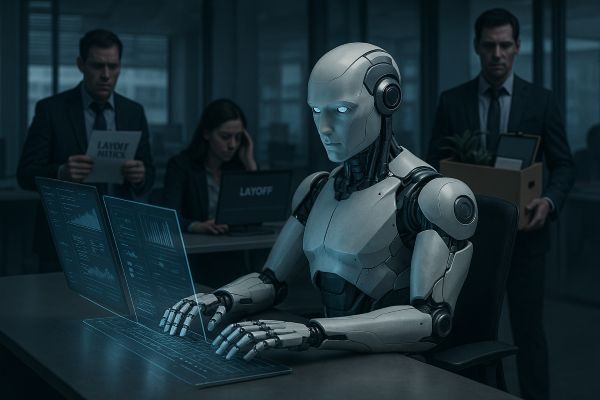
The job market is shifting faster than most people can process. You don’t need futuristic predictions anymore; you just need to read a layoff memo. Every “restructuring” or “efficiency improvement” is often a polite way of saying, “the AI system does this now.”
And the uncomfortable truth is that this is just the beginning. The first wave hit roles that were repetitive and predictable, but the next wave will touch jobs people once assumed were “safe.” No industry is completely immune.
Here’s a closer look at the roles most at risk and the ones that still have breathing room for at least now.
Jobs On Their Way Out
1. Repetitive writing roles
Low-level copywriting, listicle churn, caption factories, product descriptions the kind of work that relies on volume rather than thought.
AI doesn’t get tired, and it doesn’t charge by the hour.
2. Basic customer support
Password resets, delivery tracking, refund checks, FAQs.
Companies realised AI can answer these instantly and at scale, which is brutal for human support teams.
3. Data entry and administrative processing
Anything that involves copying, pasting, sorting, or transferring information.
AI is painfully good at this and it doesn’t make typing mistakes.
4. Transcription and summarisation jobs
Meeting notes, interviews, audio-to-text work.
Tools can now do this in seconds, and often better.
5. Junior coding roles focused only on routine tasks
Not all developers but the bottom layer of repetitive code writing is fading.
AI can generate a boilerplate function faster than a junior ever could.
6. Basic graphic design and template-level creative work
Flyers, thumbnails, simple promotional images.
AI tools now generate these in a few clicks, which cuts out entry-level designers.
7. Middle-office roles that only “move information around”
Status updates, summaries, follow-ups, reminders.
AI automates this without needing meetings to discuss the meetings.
Jobs That Will Absolutely Survive (for now at least)
1. Roles requiring deep domain knowledge
Doctors, engineers, financial analysts, lawyers, cybersecurity specialists.
AI can assist, but it cannot replace judgment built from years of real-world experience.
2. Human, emotional, face-to-face work
Therapists, teachers, social workers, nurses, caregivers.
People don’t want emotional reassurance from a software window.
3. Creative strategy
Not the writing, but the thinking behind the writing.
AI can produce content, but deciding what to create, how to position it, and why it matters is still human territory.
4. Skilled trades and physical jobs
Electricians, plumbers, carpenters, mechanics.
Robots aren’t climbing through attics or fixing leaking pipes anytime soon.
5. AI supervision and oversight roles
People who guide, correct, and monitor AI systems.
Someone has to make sure the machine isn’t hallucinating its way into a disaster.
6. Product leaders and operations specialists
AI can analyse possibilities, but someone must make decisions, understand customers, and set direction.
7. Hybrid experts humans who use AI as an extension of their skills
These people become insanely productive.
Like giving a craftsman power tools instead of hand tools.
8. Empathy-driven roles
Recruiters, HR partners, mediators, coaches.
You can’t automate human trust or emotional intelligence.
Every wave of technology feels like a bubble at first. The real question isn’t whether AI survives, it’s which parts of it become permanent fixtures in our lives. The hype will fade, the weak products will disappear, and the noise will settle. What remains will be the systems that genuinely help people work smarter, live better, and solve problems we couldn’t touch before. The bubble may burst, but the transformation won’t stop.
And the jobs that AI is going to absorb will follow the same pattern we’ve seen with every major invention: the computer killed typewriting pools, email replaced entire layers of clerical work, and automation pushed out many factory tasks. Each shift felt threatening at the time, yet new roles emerged in places no one expected. The same will happen here. AI will erase tasks, not human ambition. It will close doors that relied on repetition, and open doors that reward judgment, creativity, empathy, and expertise.
I would like to think that the future won’t belong to machines. It will belong to people who learn how to work alongside them and not in competition, but in collaboration.
