

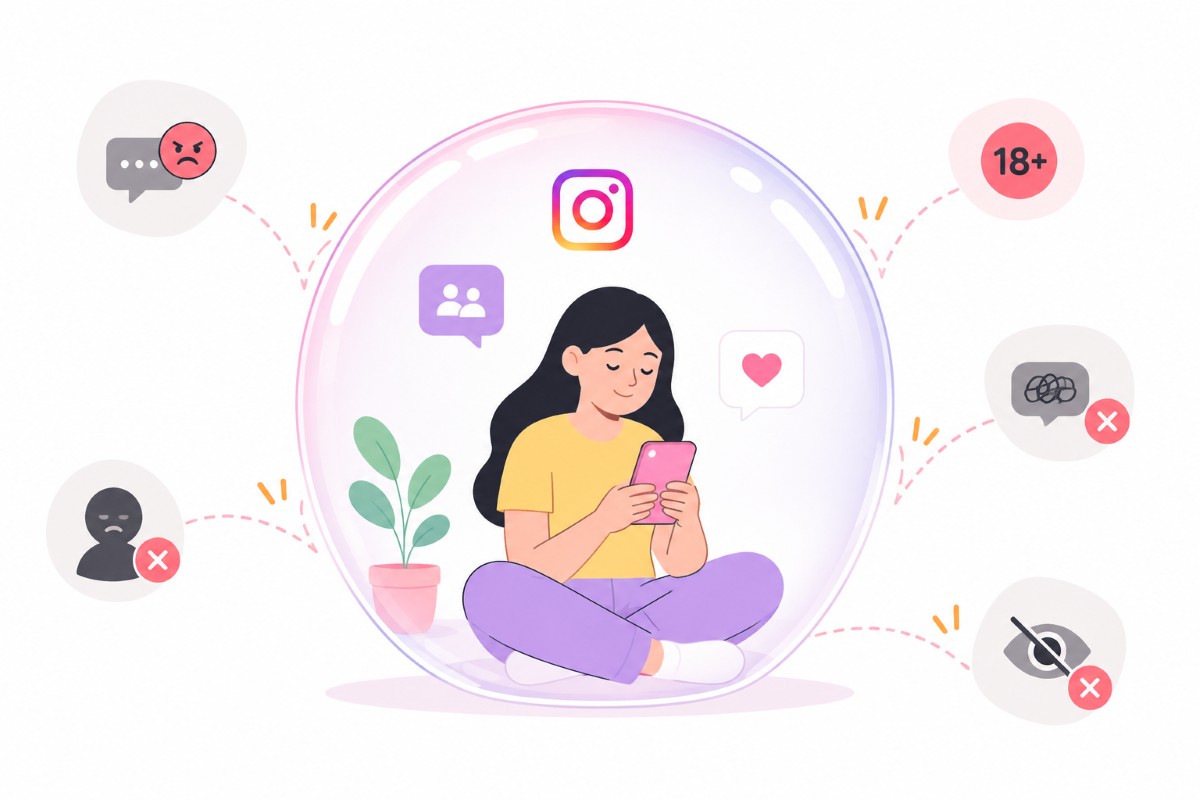
If you’ve recently noticed that an Instagram account has become private automatically or certain features suddenly feel more restricted, you’re not imagining things. Instagram has introduced Teen Accounts, a new type of account designed specifically for users under the age of 18.
Rather than asking teenagers to manually adjust dozens of privacy and safety settings, Instagram now enables many of those protections by default. This means younger users automatically receive stricter controls over who can contact them, what content they see, and how they interact with others on the platform.
The update marks one of Instagram’s biggest safety changes in recent years. It also reflects a broader shift in how social media platforms are approaching online safety for younger audiences. Instead of expecting teenagers to understand and configure complex privacy settings, the platform now starts with stronger protections already in place.
In this guide, we’ll explain what Instagram Teen Accounts are, why they were introduced, who they affect, and how they differ from a regular Instagram account.
Also read: How to See Who Shared Your Instagram Post – A Beginner’s Guide
What Are Instagram Teen Accounts?
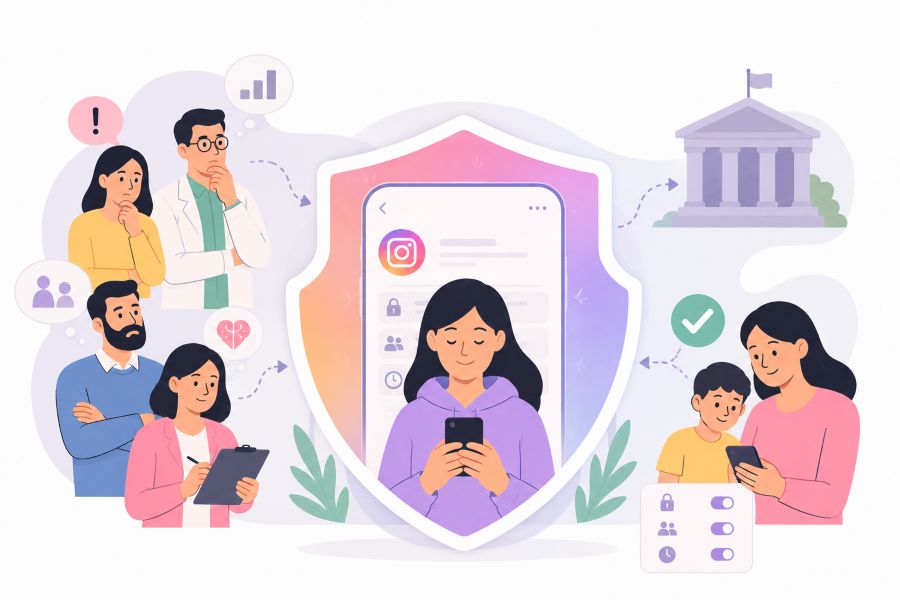
Instagram Teen Accounts are a special account experience created for users under the age of 18. They aren’t a separate app or a premium feature. Instead, they’re regular Instagram accounts with additional safety measures enabled automatically.
These built-in protections are designed to reduce unwanted interactions, limit exposure to sensitive content, and give parents greater confidence that younger users are browsing in a safer online environment.
Some of the changes include:
- Private accounts by default for younger users.
- Tighter controls over who can send direct messages.
- Stricter filtering of sensitive content in Explore and Reels.
- Automatic protection against unwanted mentions and offensive language.
- Daily screen time reminders and overnight Quiet Mode.
- Additional parental controls for younger teenagers.
The goal isn’t to change how teenagers use Instagram entirely. Instead, it’s to make the safest settings the default rather than expecting young users to find and enable them on their own.
Why Did Instagram Introduce Teen Accounts?
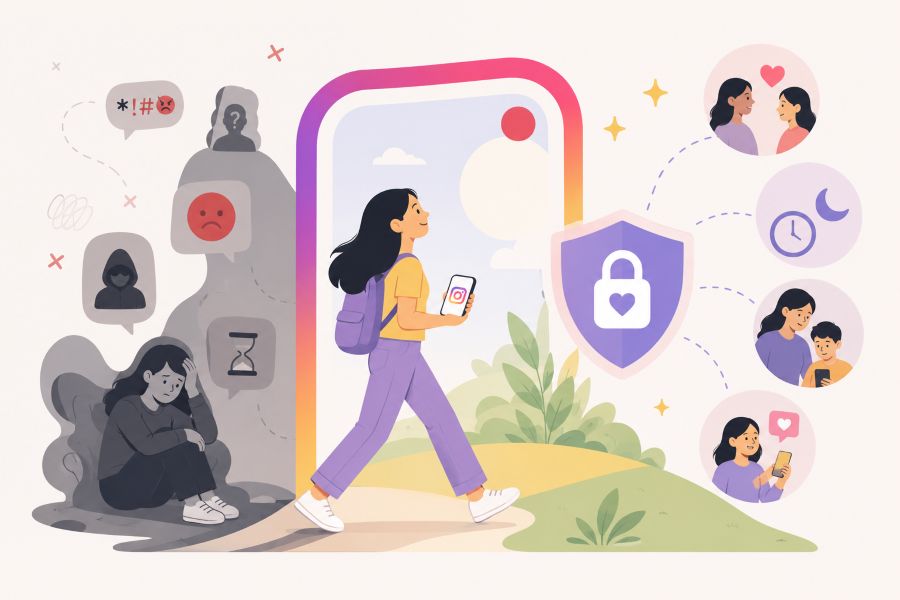
Teen Accounts weren’t introduced because of a single event. They are the result of several years of growing concern about how social media affects younger users.
Researchers, parents, educators, and regulators have raised questions about issues such as cyberbullying, unwanted contact from strangers, excessive screen time, and the effect that recommendation algorithms can have on mental well-being. As these concerns became more prominent, governments around the world began encouraging technology companies to build stronger protections directly into their products.
Instagram’s response was to move away from optional safety features and adopt a safety-by-default approach. Instead of asking teenagers to configure privacy settings after creating an account, many of the most important protections are now applied automatically.
This approach also helps parents who may not be familiar with Instagram’s many privacy options. With Teen Accounts, many of the recommended settings are already enabled from the moment a young user joins the platform.
Who Is Affected by Teen Accounts?
Teen Accounts apply to Instagram users under the age of 18, but the experience isn’t identical for every teenager.
Users aged 13 to 15 receive the strongest protections. Many settings can’t be relaxed unless a parent or guardian approves the change through Instagram’s parental supervision tools.
Users aged 16 and 17 also receive Teen Accounts automatically, but they have more flexibility to adjust certain settings themselves. Parents can still choose to enable supervision if both the parent and teenager agree to link their accounts.
Once a user turns 18, the account is no longer treated as a Teen Account, although they can continue using many of the privacy features if they wish.
When Were Teen Accounts Introduced?
Instagram announced Teen Accounts as part of a broader effort to improve online safety for younger users. The feature was introduced in phases, beginning with selected countries before expanding to more regions over time.
The rollout has continued alongside similar safety updates for other Meta platforms, including Facebook and Messenger. This reflects the company’s broader strategy of creating a more consistent experience for teenagers across its family of apps.
How Are Teen Accounts Different From Regular Instagram Accounts?
At first glance, Teen Accounts look almost identical to a standard Instagram profile. The biggest differences are found behind the scenes, where stricter privacy and safety settings are enabled automatically.
| Feature | Regular Instagram Account | Teen Account |
|---|---|---|
| Account privacy | Can be public or private | Private by default for younger users |
| Direct messages | Anyone can send a message request | Messages limited to approved connections |
| Sensitive content | Standard filtering | Strongest filtering enabled |
| Tags and mentions | Wider visibility | Restricted to help prevent unwanted interactions |
| Screen time tools | Optional | Reminders and overnight Quiet Mode enabled |
| Parental supervision | Optional | Built into the Teen Account experience |
These differences may seem small individually, but together they create a noticeably more protected experience for younger users without requiring them to change dozens of settings manually.
Next, we’ll take a closer look at each protection and explain how it works in everyday use.
How Instagram Teen Accounts Work
Now that we’ve covered why Instagram introduced Teen Accounts, let’s look at what actually changes once an account is placed under these protections.
Most of the safety features work quietly in the background. Teenagers don’t have to switch them on manually or search through privacy menus. Instead, Instagram enables them automatically, creating a safer experience from the moment the account qualifies as a Teen Account.
Let’s explore each protection in detail.
1. Private Accounts by Default
Privacy is one of the biggest changes introduced with Teen Accounts.
For younger teenagers, Instagram automatically sets the account to Private. This means only approved followers can see posts, Stories, Reels, and follower lists.
In a regular public account, almost anyone on Instagram can discover your profile through search, Explore, hashtags, or shared content. Teen Accounts reduce that visibility significantly.
This simple change gives teenagers more control over who can access their content without requiring them to understand Instagram’s privacy settings first.
What this means in everyday use
If someone your teen doesn’t know wants to follow them, they’ll first need to send a follow request. Until that request is accepted, they won’t be able to browse the account’s content.
2. Safer Direct Messages
Direct messages are often where unwanted interactions begin. That’s why Instagram has introduced stricter messaging rules for Teen Accounts.
By default, teenagers can only receive new message requests from people they already follow or have an existing connection with. Random users can’t simply appear in their inbox.
This reduces unwanted conversations from strangers, scammers, fake accounts, and people attempting to contact younger users without permission.
Example
Suppose a stranger discovers a teenager’s profile through comments on a public post. On a standard account, they could usually send a message request. With a Teen Account, that request may never reach the teenager unless Instagram considers the interaction appropriate under its safety rules.
3. Stronger Sensitive Content Filtering
Instagram’s recommendation system powers features like Explore, Reels, Search, and suggested accounts. Teen Accounts apply the platform’s highest level of sensitive content filtering across these areas.
As a result, teenagers are less likely to be recommended content involving:
- Graphic violence
- Sexually suggestive material
- Cosmetic procedures
- Tobacco and vaping products
- Alcohol-related content
- Other mature or potentially harmful topics
The content isn’t necessarily removed from Instagram altogether. Instead, Instagram limits how frequently it recommends this material to teenage users.
This creates a browsing experience that is generally more age-appropriate without changing the accounts they already follow.
4. Built-In Protection Against Bullying
Online harassment can happen through comments, message requests, mentions, and tags. Teen Accounts include several protections that are designed to reduce these experiences.
One of the most important features is Hidden Words, which is enabled automatically. It filters comments and message requests containing offensive language, insults, or abusive terms before they reach the teenager.
Instagram also limits who can mention or tag Teen Accounts, making it more difficult for strangers to draw unwanted attention to younger users.
While no automated system can stop every instance of bullying, these protections reduce many of the most common forms of unwanted interaction.
5. Screen Time Reminders and Sleep Mode
Instagram also encourages healthier usage habits through built-in time management features.
After approximately 60 minutes of daily use, teenagers receive a reminder encouraging them to take a break from the app.
At night, Sleep Mode automatically activates between 10:00 PM and 7:00 AM.
During this period:
- Notifications are muted.
- Incoming messages receive an automatic reply explaining that the user is currently in Sleep Mode.
- Instagram encourages users to return later rather than continue scrolling late into the night.
These features are intended to promote healthier screen habits, especially during school nights.
6. Restrictions on Instagram Live
Live streaming allows creators to broadcast in real time and interact directly with viewers. While this can be a positive feature, it also introduces additional privacy and safety risks for younger users.
For teenagers aged 13 to 15, Instagram requires parental approval before they can start a Live broadcast.
Older teenagers have greater flexibility, although Instagram still applies its standard safety policies.
This additional approval helps prevent younger users from accidentally sharing personal information with a large public audience.
7. Different Rules for Different Age Groups
Not every Teen Account works in exactly the same way.
Instagram separates teenagers into two groups.
Ages 13 to 15
This group receives the strongest protections.
Many safety settings can’t be relaxed unless a parent or guardian approves the change through Instagram’s supervision tools.
For example, younger teens generally need parental approval before changing certain privacy settings or using features like Instagram Live.
Ages 16 and 17
Older teenagers also receive Teen Accounts automatically, but they have more freedom to manage their own settings.
Parents can still enable supervision if both the teenager and parent choose to link their accounts.
This approach gives older teens greater independence while still providing access to additional safety tools when families want them.
8. Parental Supervision
Instagram has expanded its parental supervision features alongside Teen Accounts.
Rather than allowing parents to monitor every conversation, the platform focuses on helping families understand how the app is being used while preserving teenagers’ privacy.
Parents can:
- Set daily screen time limits.
- Schedule breaks during certain hours.
- See which accounts their teenager has recently messaged.
- Review changes made to important safety settings.
However, parents cannot read the content of private messages.
This balance is designed to give parents better visibility into their teenager’s activity without removing their personal privacy.
9. How Instagram Verifies a User’s Age
One obvious question is: what stops someone from simply entering a fake birth date?
To improve accuracy, Instagram doesn’t rely solely on the date of birth entered during sign-up.
The company also uses additional signals to estimate a user’s age. These may include account activity, interactions, reports from other users, and AI systems that identify whether an account may belong to someone younger than the age they’ve provided.
If Instagram believes an account’s stated age may be inaccurate, it may ask the user to verify their age using methods such as:
- A government-issued ID.
- A video selfie for age estimation.
- Other verification methods available in supported regions.
These checks are intended to reduce the number of underage users who attempt to bypass Teen Account protections by registering as adults.
Teen Accounts combine all of these protections into a single experience. Rather than expecting teenagers to configure dozens of privacy and safety settings themselves, Instagram enables many of the recommended safeguards automatically from the start.
But introducing more restrictions also raises important questions. Do these changes actually make teenagers safer? How do they affect parents, creators, and businesses? And are there any limitations to the system?
Now, we’ll look beyond the features themselves and examine the real-world impact of Instagram Teen Accounts.
The Real-World Impact of Instagram Teen Accounts
Teen Accounts aren’t just another privacy update. They represent a broader change in how social media platforms approach younger users.
For years, Instagram gave people the tools to manage their privacy, but it was largely up to individuals to find those settings and decide how to use them. Teen Accounts reverse that approach by making stronger protections the default rather than the exception.
While the changes are generally welcomed by parents and child safety advocates, they also affect teenagers, content creators, businesses, and even how Instagram’s recommendation system works.
Let’s look at the bigger picture.
Benefits for Teenagers
The biggest advantage of Teen Accounts is that they reduce the amount of decision-making required from younger users.
Many teenagers join social media with little understanding of privacy settings or the risks that come with interacting online. By automatically enabling stronger protections, Instagram removes much of that burden.
Some of the most noticeable benefits include:
- Fewer unwanted messages from strangers.
- Greater control over who can view personal content.
- Reduced exposure to mature or sensitive material.
- Better protection against spam and online harassment.
- Healthier screen time habits through built-in reminders and Sleep Mode.
None of these features completely eliminate online risks, but together they create a safer starting point for younger users.
Why Many Parents Support the Change
For many parents, one of the biggest challenges has been understanding Instagram’s privacy settings.
Teen Accounts simplify that process by enabling many recommended protections automatically instead of expecting parents to configure dozens of options themselves.
The parental supervision tools also offer a reasonable balance between oversight and privacy.
Parents can monitor:
- Daily screen time.
- Recent messaging activity.
- Important account setting changes.
At the same time, they cannot read private conversations, helping teenagers maintain a degree of personal privacy while still giving parents confidence that appropriate safeguards are in place.
How Teen Accounts Affect Content Creators
Teen Accounts also change how creators reach younger audiences.
Because Instagram applies stricter recommendation filters, some types of content are less likely to appear in a teenager’s Explore page or Reels feed.
This may affect creators who regularly publish content related to:
- Cosmetic procedures.
- Weight loss transformations.
- Alcohol or vaping products.
- Gambling.
- Mature humour.
- Sexually suggestive content.
Even if this content doesn’t violate Instagram’s Community Guidelines, it may receive less visibility among teenage users because the recommendation system applies stricter filtering.
Creators whose audience consists mainly of adults are unlikely to notice significant changes. However, creators with a large teenage following may see shifts in engagement depending on the type of content they produce.
What It Means for Businesses and Brands
Brands that market products or services to teenagers may also notice changes.
Since Teen Accounts reduce unsolicited messages and apply stronger recommendation filters, businesses may find it more difficult to reach younger audiences organically.
This doesn’t mean advertising to teenagers disappears altogether. Instead, Instagram places more emphasis on age-appropriate recommendations and safer interactions.
For marketers, this means creating content that provides genuine value rather than relying on shock value or highly sensational material to attract attention.
Brands that already focus on educational, entertaining, or informative content are unlikely to be affected as much as those that depend on controversial or mature themes.
Do Teen Accounts Solve Every Safety Problem?
Although Teen Accounts introduce several important protections, they aren’t a complete solution.
Like any online safety system, there are limitations.
For example:
- Teenagers may still encounter harmful content shared by accounts they already follow.
- Cyberbullying can still occur between friends or classmates.
- No automated system can perfectly identify inappropriate behaviour.
- Some users may attempt to bypass restrictions by providing an incorrect birth date.
Instagram has introduced additional age verification methods to reduce these issues, but no system can guarantee complete accuracy.
Teen Accounts should therefore be viewed as one layer of protection rather than a replacement for parental guidance, education, or responsible online behaviour.
Privacy and Age Verification Concerns
One of the more debated aspects of Teen Accounts is Instagram’s use of age verification technology.
To prevent underage users from bypassing restrictions, Instagram may ask certain users to confirm their age through methods such as government-issued identification or AI-powered video selfie verification.
Supporters argue that these measures make the platform safer by ensuring younger users receive the protections intended for them.
Critics, however, have raised concerns about privacy, accuracy, and the possibility of AI systems incorrectly estimating someone’s age.
Instagram states that video selfies used for age estimation aren’t used for identity recognition and are deleted after the verification process. Even so, some users remain cautious about sharing biometric information with online platforms.
The debate highlights a broader challenge facing the technology industry: improving safety while respecting user privacy.
How Instagram Compares with Other Platforms
Instagram isn’t the only platform introducing stronger protections for younger users.
TikTok, YouTube, Snapchat, and other social media companies have gradually expanded parental controls, screen time tools, and age-based safety features over the past few years.
What makes Teen Accounts different is that many protections are enabled automatically instead of relying on teenagers or parents to switch them on manually.
This reflects a growing industry trend known as “safety by default.” Rather than expecting users to secure their accounts after creating them, platforms increasingly begin with the safest settings and allow changes only when appropriate.
As governments around the world continue introducing stricter online safety regulations, similar approaches are likely to become more common across other digital platforms.
A Shift in How Social Media Thinks About Safety
Perhaps the most significant aspect of Teen Accounts isn’t any individual feature.
It’s the philosophy behind them.
For years, social media companies placed much of the responsibility for online safety on users themselves. Teen Accounts represent a different approach by assuming that younger users deserve stronger protections from the moment they create an account.
Whether these measures ultimately reduce cyberbullying, improve mental well-being, or encourage healthier social media habits will become clearer over time.
What is already clear, however, is that Instagram has moved beyond simply offering privacy tools. It is now actively shaping how younger users experience the platform from day one.
In the final section, we’ll answer the most common questions about Instagram Teen Accounts and discuss what these changes mean for the future of online safety.
Frequently Asked Questions and Final Thoughts
By now, you should have a good understanding of how Instagram Teen Accounts work and why Meta introduced them. However, some practical questions continue to come up as more users are moved to the new system.
Below are answers to the questions people ask most often.
Frequently Asked Questions
Can I turn off Instagram Teen Accounts?
It depends on your age.
If you’re between 13 and 15 years old, you can’t remove many of the built-in protections on your own. Changes to certain safety settings require approval from a parent or guardian through Instagram’s supervision tools.
If you’re 16 or 17, you have more control over your account settings and can adjust some restrictions yourself, although your account will still be classified as a Teen Account until you turn 18.
What happens when I turn 18?
Once you become an adult, your account is no longer treated as a Teen Account.
The automatic restrictions tied specifically to teenagers are removed, and you can manage your privacy and safety settings like any other Instagram user.
That said, many of the features introduced through Teen Accounts, such as private accounts or Hidden Words, remain available if you choose to keep using them.
Can parents read private messages?
No.
Instagram does not allow parents to read the contents of direct messages through its supervision tools.
Parents can see information such as:
- Recent accounts their teenager has messaged.
- Daily time spent on Instagram.
- Changes made to important account settings.
- Screen time limits they have configured.
The actual conversations remain private.
Can strangers send messages to Teen Accounts?
In most cases, no.
Instagram limits new message requests so that teenagers generally only receive messages from people they already follow or have an existing connection with.
This significantly reduces unwanted contact from strangers, spam accounts, and potential scammers.
Are Teen Accounts private by default?
Yes.
For younger teenagers, Instagram automatically makes the account private, meaning only approved followers can view posts, Stories, Reels, and other shared content.
This helps prevent unknown users from browsing a teenager’s profile without permission.
Can Teen Accounts still use Instagram Live?
It depends on the user’s age.
Teenagers aged 13 to 15 generally require parental approval before they can start a Live broadcast.
Older teenagers have greater flexibility, although Instagram’s standard safety policies still apply.
How does Instagram know someone’s real age?
Instagram primarily relies on the birth date entered during account creation.
However, the platform also uses additional methods to identify accounts that may have provided incorrect information.
In some situations, Instagram may ask users to verify their age through:
- A government-issued ID.
- A video selfie used for age estimation.
- Other verification methods available in supported countries.
These checks are intended to reduce attempts to bypass Teen Account protections.
Is Instagram Teen Accounts available worldwide?
Instagram introduced Teen Accounts in phases rather than launching them globally all at once.
Availability depends on your country and Instagram’s rollout schedule. If the feature hasn’t reached your region yet, it may become available as Meta continues expanding the program.
Do Teen Accounts affect what appears in Explore and Reels?
Yes.
Teen Accounts use Instagram’s strongest sensitive content filters, meaning recommendations in Explore, Reels, and Search are more carefully selected.
Teenagers are less likely to see content involving mature themes, graphic violence, cosmetic procedures, alcohol, tobacco, or other material that Instagram considers unsuitable for younger audiences.
Can teenagers bypass these restrictions?
Some users may attempt to bypass Teen Accounts by entering an incorrect date of birth when creating an account.
To reduce this, Instagram combines age information with additional verification methods, including AI-based age estimation and identity verification in certain situations.
While no system is perfect, these measures make it more difficult to avoid the protections intended for younger users.
Final Thoughts
Instagram Teen Accounts represent more than just another feature update. They signal a shift in how social media platforms approach online safety for younger users.
Instead of placing the responsibility on teenagers to understand complex privacy settings, Instagram now starts with stronger protections already in place. Features like private accounts, stricter messaging controls, sensitive content filtering, and parental supervision are designed to reduce common online risks without requiring users to configure everything themselves.
Of course, Teen Accounts aren’t a complete solution. Online safety still depends on responsible behaviour, open conversations between parents and teenagers, and continued improvements from technology companies. Cyberbullying, misinformation, and harmful interactions can’t be eliminated through account settings alone.
Even so, this update marks one of Instagram’s most significant safety initiatives to date. By making safer settings the default rather than optional, the platform is moving toward an approach that many experts have advocated for years: building protection into the product instead of expecting users to find it themselves.
Whether you’re a teenager trying to understand the changes, a parent helping your child navigate social media, or simply someone curious about Instagram’s latest update, Teen Accounts offer a clear glimpse into the future of online safety.
As governments continue introducing new digital safety regulations and platforms face increasing scrutiny, it’s likely that “safety by default” will become the standard rather than the exception. Instagram may be one of the first major platforms to embrace this approach at scale, but it almost certainly won’t be the last.
