


You spend hours working on a video, finally hit publish, and wait to see how it performs.
But nothing really happens. A few views here and there, almost no engagement, and no clear progress.
It can feel confusing, especially when you know your content is good.
What makes this more frustrating is that some of the biggest creators today did not start with perfect videos either. Early in his journey, MrBeast uploaded videos like counting to 100,000 or watching paint dry. On the surface, those ideas looked simple, even absurd. But they worked because they were built to hold attention and trigger curiosity.
That is the part most creators miss.
The problem is not always the video itself. Most of the time, it comes down to how well your content is optimized for how YouTube actually works.
YouTube decides what to show based on signals like relevance, watch time, and engagement. If your video does not send those signals clearly, it struggles to get noticed, no matter how much effort you put into it.
That is where this guide comes in.
You will learn a simple, step-by-step YouTube SEO checklist that you can use for every video you upload. It will help you understand what actually matters, what drives visibility, and how to improve your chances of getting consistent views.
By the end, you will have a clear process you can follow without overthinking every upload.
What is YouTube SEO (and Why It Matters)
YouTube SEO is the process of optimizing your videos so they can be discovered through search and recommended by YouTube.
Every time someone searches for a topic or watches a video, YouTube decides what to show next. It uses signals like your title, description, watch time, and engagement to understand what your content is about and whether people find it useful.
If your video is properly optimized, it has a higher chance of:
- Appearing in search results
- Showing up in suggested videos
- Getting recommended on the homepage
This is what drives consistent views.
Without SEO, your video depends on luck. With SEO, you give your content a clear path to reach the right audience.
For beginners, it helps to think of YouTube SEO in two simple parts:
1. Relevance
YouTube needs to understand what your video is about. This comes from your keywords, title, description, and overall content.
2. Performance
Once your video is shown to people, YouTube watches how they react. Do they click? Do they watch till the end? Do they engage?
If both are strong, your video gets pushed to more viewers.
That is why some videos grow steadily over time while others stop getting views after a few hours.
In the next section, we will break down a complete YouTube SEO checklist you can follow step by step before and after uploading any video.
Read also: YouTube Community Posts Explained: Strategy, Examples, and Tips
Before You Start: How YouTube Actually Ranks Videos
Before you start optimizing your videos, it helps to understand how YouTube actually decides what to promote.
When you upload a video, YouTube does not immediately show it to a large audience. It first tests your video with a small group of viewers.
Based on how those viewers respond, the platform decides what to do next.
There are two key signals that matter most at this stage:
1. Click-Through Rate (CTR)
This measures how many people click on your video after seeing it.
If your title and thumbnail attract clicks, YouTube sees your video as relevant and worth showing to more people.
2. Watch Time and Retention
This measures how long people stay on your video.
If viewers watch a large portion of your content, it signals that your video is valuable and engaging.
If both of these signals are strong, your video gets pushed to a wider audience. If they are weak, your video stops getting impressions.
This is why some videos grow quickly while others fade out within hours.
Where SEO Fits In
YouTube SEO helps your video get discovered in search and recommendations.
But SEO alone does not guarantee growth.
- SEO helps YouTube understand your video
- Performance helps YouTube trust your video
You need both for consistent results.
Once you understand this, the checklist below will make much more sense. Each step is designed to improve either visibility, engagement, or both.
Read also: How to Perform YouTube Competitor Analysis (Step by Step)
Complete YouTube SEO Checklist (Step-by-Step)
Use this checklist every time you upload a video. Each step helps YouTube understand your content and increases your chances of getting more views.
1. Start with Keyword Research
Before you upload anything, you need to know what people are searching for.
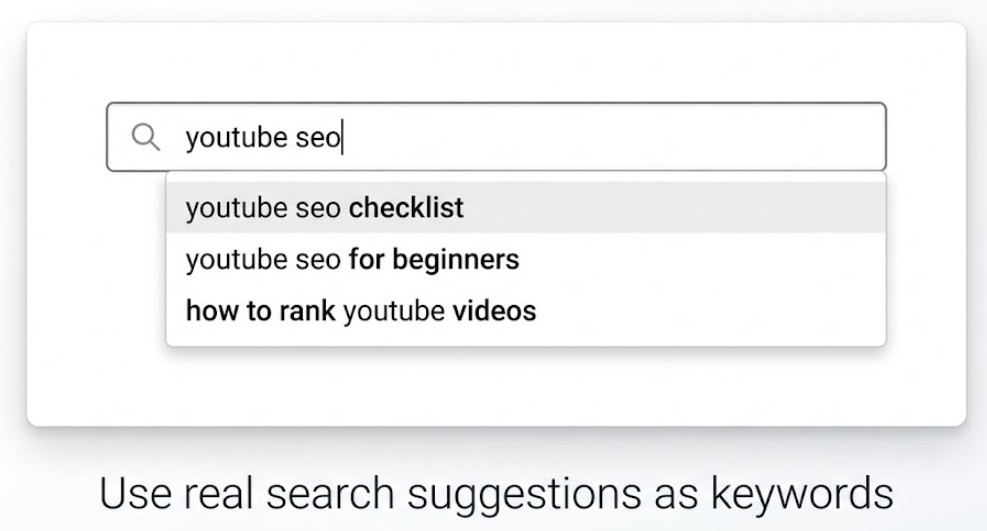
Go to YouTube search and start typing your topic. You will see autocomplete suggestions. These are real searches. Use them.
You can also:
- Look at titles of top-ranking videos
- Check what keywords competitors are targeting
- Focus on longer phrases instead of single words
For example, instead of targeting “YouTube SEO”, go for:
- YouTube SEO checklist
- YouTube SEO for beginners
- how to rank YouTube videos
These are easier to rank for and bring more targeted viewers.
2. Write a Clear, Keyword-Focused Title
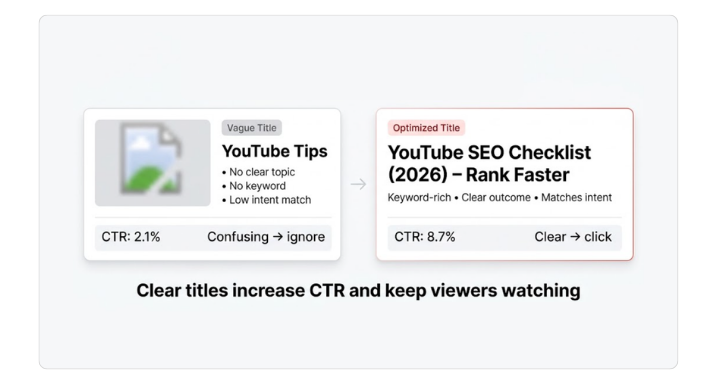
Your title tells YouTube what your video is about. It also decides whether people click or ignore it.
Keep it simple:
- Include your main keyword naturally
- Make it clear and specific
- Avoid misleading clickbait
Good titles get clicks and match what the viewer expects. If people click and stay, your video gets pushed further.
3. Optimize Your Description Properly
Your description helps YouTube understand your content in more detail.
Focus on the first 2–3 lines. This is what people see before clicking “show more”.
Make sure you:
- Mention your main keyword early
- Explain what the video covers
- Add supporting keywords naturally
You can also add helpful links and resources here, but keep the focus on clarity first.
4. Use Tags (But Don’t Overthink Them)
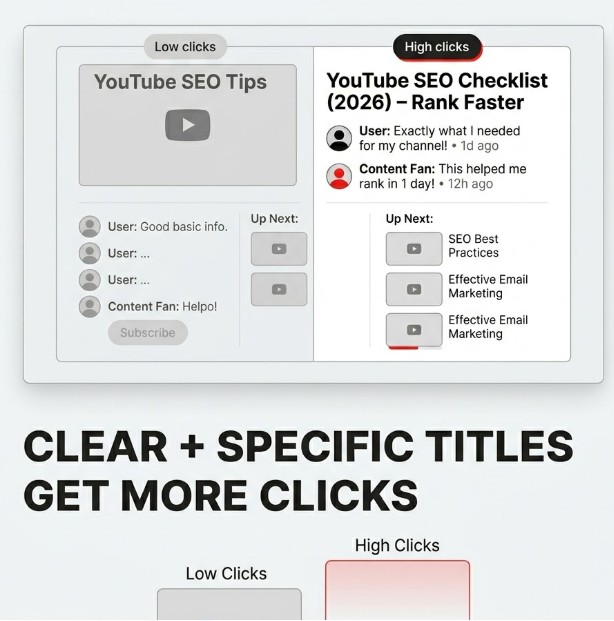
Tags are not as powerful as they used to be, but they still help YouTube understand your topic.
Use:
- Your main keyword
- Variations of your keyword
- Common misspellings
Do not spam irrelevant tags. Keep them focused.
5. Create a Strong Thumbnail
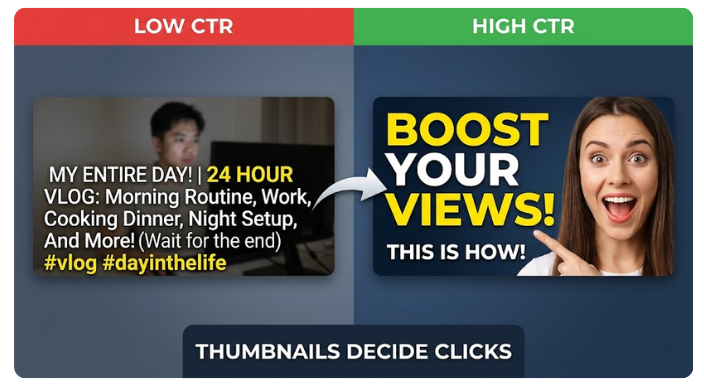
Your thumbnail affects click-through rate, which directly impacts ranking.
A good thumbnail should:
- Be easy to understand at a glance
- Use high contrast
- Show emotion or curiosity
- Match the title
If people do not click, your video will not perform no matter how good your SEO is.
6. Focus on Watch Time and Retention
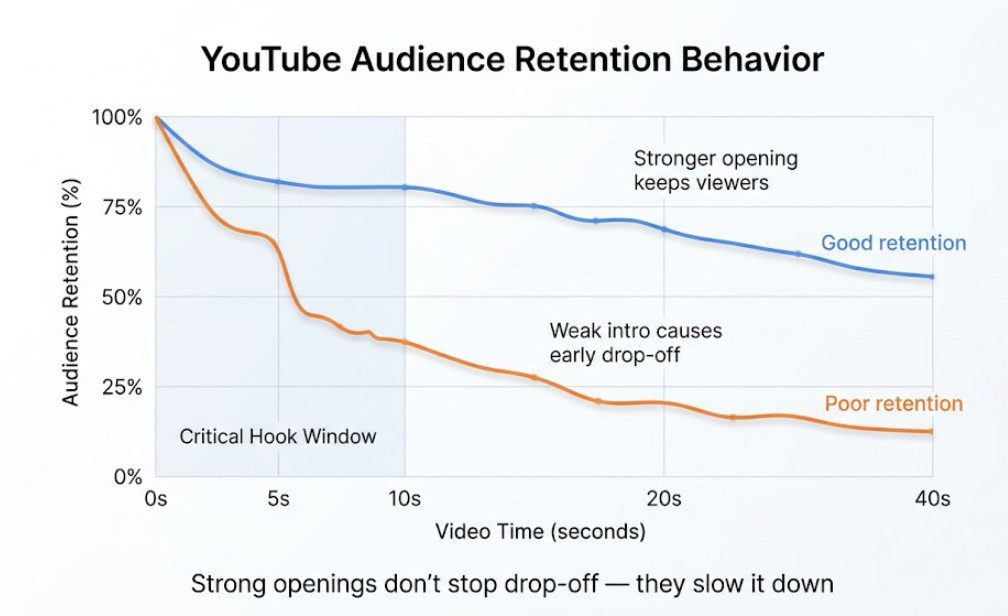
This is one of the most important ranking factors.
YouTube wants people to stay on the platform. If your video keeps viewers watching, it gets promoted more.
To improve retention:
- Hook viewers in the first 5–10 seconds
- Avoid long intros
- Keep the pacing tight
- Remove unnecessary parts
Better retention leads to better rankings.
7. Add Captions and Subtitles
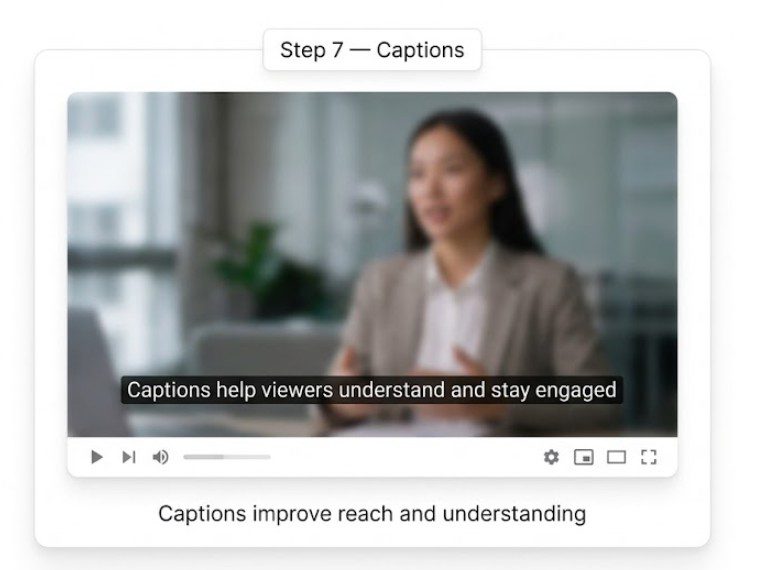
Captions help YouTube understand your content better and make your videos accessible to more people.
You can:
- Use automatic captions and edit them
- Upload your own captions
This adds extra context and improves discoverability.
8. Use Chapters to Structure Your Video
Chapters make your video easier to navigate.
They also help YouTube understand different parts of your content.
Use timestamps with clear labels. This improves user experience and can increase watch time.
9. Name Your Video File Properly
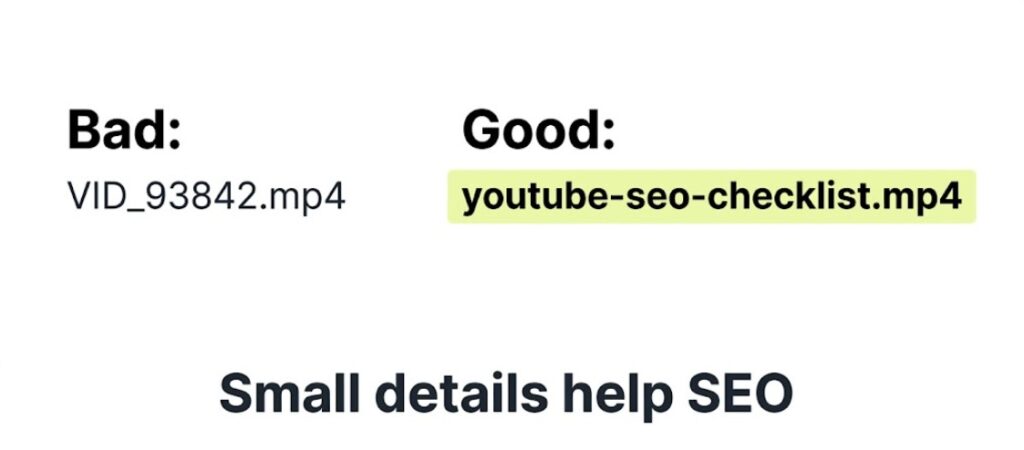
Before uploading, rename your file using your keyword.
Example:
youtube-seo-checklist.mp4
It is a small step, but it helps reinforce your topic.
10. Use Playlists to Increase Session Time
Add your video to a relevant playlist.
Playlists help:
- Group similar content
- Keep viewers watching multiple videos
- Increase overall watch time
This signals value to YouTube.
11. Encourage Engagement Early
Likes, comments, and shares matter.
Ask simple questions in your video to encourage comments. Respond to viewers to build interaction.
Early engagement tells YouTube that people care about your content.
This checklist covers everything you need to optimize your videos properly.
But there is one important piece most creators miss.
Even when everything is optimized, videos often struggle to gain traction in the beginning.
In the next section, we will look at why that happens and what you can do about it.
The Missing Piece Most Creators Ignore
You can follow every step in the checklist and still see very little movement in the beginning.
This is where many creators get frustrated.
The reality is simple. YouTube does not just rank videos based on optimization. It also looks at how people respond to your video early on.
When you publish a video, YouTube tests it with a small audience. Based on their behavior, it decides whether to push it further or stop showing it.
If your video does not get enough clicks, watch time, or engagement in that early phase, it slows down quickly.
That is why two videos with similar quality can perform very differently.
One gets traction early and keeps growing. The other stays stuck.
Why Early Traction Matters
In the first few hours and days, YouTube is looking for signals like:
- Are people clicking on your video?
- Are they watching for a decent amount of time?
- Are they liking or commenting?
If the answer is yes, your video gets shown to more people.
If not, it loses momentum.
This is also why timing matters. Publishing when your audience is active can improve your chances of getting those initial signals. If you are unsure about timing, this guide breaks it down clearly:
Guide: Best time to post on YouTube
Why SEO Alone Is Not Always Enough
SEO helps your video get discovered over time. But in the early stage, your video still needs activity.
Think of it like this:
- SEO helps YouTube understand your video
- Engagement helps YouTube trust your video
Without that early trust, even well-optimized videos can take weeks to pick up.
This is where many creators look for ways to accelerate their growth. Instead of waiting for weeks, they focus on building early traction through promotion. You can choose to buy YouTube views to give your videos an initial push and improve visibility. If you want to explore how this works, you can check this YouTube promotion service.
How Creators Solve This Problem
Creators who grow faster usually do not rely on SEO alone.
They combine it with:
- Smart publishing timing
- Sharing across platforms
- Building initial engagement
Some also use promotion strategies to give their videos a starting push. This helps generate early activity, which can improve how YouTube evaluates the video.
If you want practical ways to increase views and build that early momentum, this guide covers it step by step.
Where This Fits Into Your Strategy
You do not need to choose between SEO and growth strategies.
The strongest approach is to combine both:
- Optimize every video using the checklist
- Focus on early traction after publishing
This gives your content a much better chance of performing consistently.
In the next section, we will go over common YouTube SEO mistakes that can quietly hurt your rankings, even if you are doing everything else right.
Common YouTube SEO Mistakes to Avoid
Even small mistakes can hold your videos back. Many creators follow the right steps but still struggle because of these issues.
1. Focusing Only on Keywords
Keywords matter, but they are just one part of the system.
Some creators spend too much time trying to “perfect” keywords and ignore what actually drives performance, which is viewer behavior.
If people do not click or watch your video, rankings will drop no matter how well optimized your title and description are.
2. Writing Titles for SEO, Not for Clicks
A title can be perfectly optimized and still fail.
If it does not catch attention or clearly communicate value, people will not click.
A good title should:
- Include your keyword
- Be easy to understand
- Give a clear reason to watch
Always balance clarity with curiosity.
3. Ignoring Thumbnails
This is one of the biggest mistakes.
Your thumbnail is often the first thing people notice. If it does not stand out, your click-through rate drops.
Even strong videos struggle if the thumbnail is weak or confusing.
4. Long or Slow Intros
If viewers leave in the first few seconds, your retention drops quickly.
Avoid:
- Long logos or animations
- Slow openings
- Unnecessary explanations at the start
Get straight to the point and hook the viewer early.
5. Not Optimizing the Description Properly
Many creators either:
- Write too little
- Or fill it with random keywords
Both are ineffective.
Your description should clearly explain what the video covers and support your main keyword naturally.
6. Uploading Without a Strategy
Publishing a video and hoping it performs is not a strategy.
You should have a clear plan:
- What keyword are you targeting?
- Who is the video for?
- What problem does it solve?
Without this, your videos lack direction.
7. Ignoring Early Engagement
Some creators upload and move on.
But the first few hours matter a lot. If your video does not get early interaction, it becomes harder to grow.
Encourage comments, reply to viewers, and stay active after publishing.
8. Being Inconsistent
YouTube favors channels that upload consistently.
If you disappear for long periods, it becomes harder to build momentum.
Consistency helps both with audience growth and algorithm trust.
Avoiding these mistakes will give your videos a much stronger foundation.
In the next section, we will put everything together into a simple checklist you can quickly review before publishing any video.
YouTube SEO Checklist (Quick Recap)
Use this as a final review before you publish any video.
Before Uploading
- Choose a clear keyword based on what people are searching
- Create a video that directly answers that topic
- Keep the intro strong and get to the point quickly
- Name your video file using your main keyword
During Upload
- Write a clear, keyword-focused title
- Add a detailed description with your main keyword in the first few lines
- Include relevant tags (main keyword + variations)
- Design a high-contrast, clickable thumbnail
After Publishing
- Add your video to a relevant playlist
- Use chapters to structure your content
- Add captions or subtitles
- Share your video to get initial traction
Ongoing Optimization
- Monitor watch time and audience retention
- Check click-through rate and improve thumbnails if needed
- Respond to comments to increase engagement
- Update older videos if performance drops
If you follow this checklist consistently, your videos will have a much better chance of ranking and getting recommended.
Final Thoughts
YouTube SEO is not complicated, but it does require consistency.
Most creators fail because they skip steps, rush uploads, or rely on luck. When you follow a clear process every time, your results become more predictable.
Focus on doing the basics well:
- Choose the right topic
- Optimize your video properly
- Pay attention to how viewers respond
Over time, this builds momentum.
If your goal is to grow faster, remember that SEO works best when combined with strong early traction and smart promotion. When both are in place, your videos have a much higher chance of reaching the right audience.
