

Getting reviews on Trustpilot is not about luck, aggressive asking, or clever wording. It is about understanding how people behave after they finish doing business with you. Most customers are not against leaving reviews. They are simply busy, distracted, or unsure if their feedback is needed. Your job is to remove that uncertainty and make the action feel natural.
Many businesses struggle with reviews because they treat them like marketing. Reviews are not marketing. They are a continuation of the customer experience. When handled correctly, reviews feel like a normal closing step, not a favor.
Let us break this down in a clear and calm way.
When Is the Best Time to Ask for a Trustpilot Review
The timing of your review request plays a major role in whether a customer responds or ignores it. Many businesses ask for reviews, but they ask at the wrong moment, which reduces the chances of getting a response.
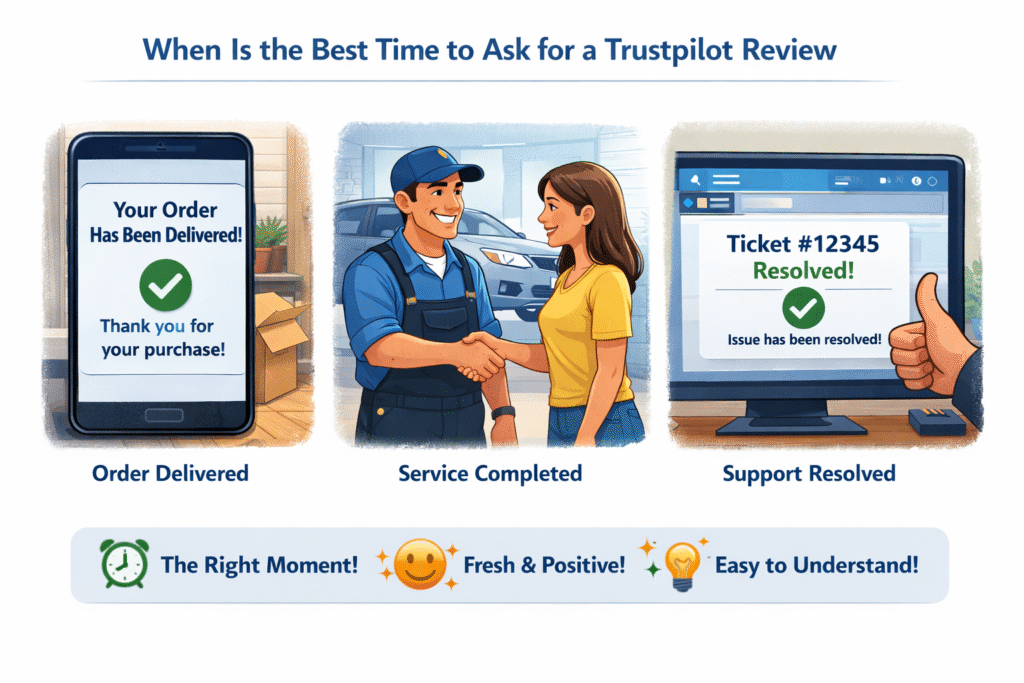
The best time to ask for a Trustpilot review is immediately after a customer has a successful experience with your business. This could be after an order has been delivered, a service has been completed, or a support issue has been resolved properly. At this stage, the experience is still fresh in the customer’s mind. They clearly remember what went well and how your business helped them.
When the request comes at this moment, leaving a review feels easy. The customer does not need to think hard or recall details from the past. Writing a few lines feels like a natural continuation of the interaction they just had with you.
If you wait too long, the situation changes. After a day or two, customers move on to other tasks. The emotional connection to the experience fades. Even if they were satisfied, the request starts to feel less important. At that point, leaving a review feels like extra work instead of a simple action.
The key idea is straightforward. When a customer has just received value from your business, they are most open to sharing feedback. Asking at that exact moment increases the likelihood of receiving an honest and timely Trustpilot review.
Have you used Socioblend’s services to get more Trustpilot reviews without all the manual work yet? Socioblend understands how slow and frustrating review growth can be, especially when you are relying only on follow ups, emails, and customer reminders. In many cases, it can take months to build steady momentum, even when your service quality is strong. If you want a reliable way to strengthen your Trustpilot presence while staying compliant with platform rules, you can explore Socioblend’s solution here: Truspilot review service. It is designed to support businesses that want consistent visibility, credibility, and long term review growth without cutting corners or risking their profile.
How to Make the Trustpilot Review Process Easy for Customers
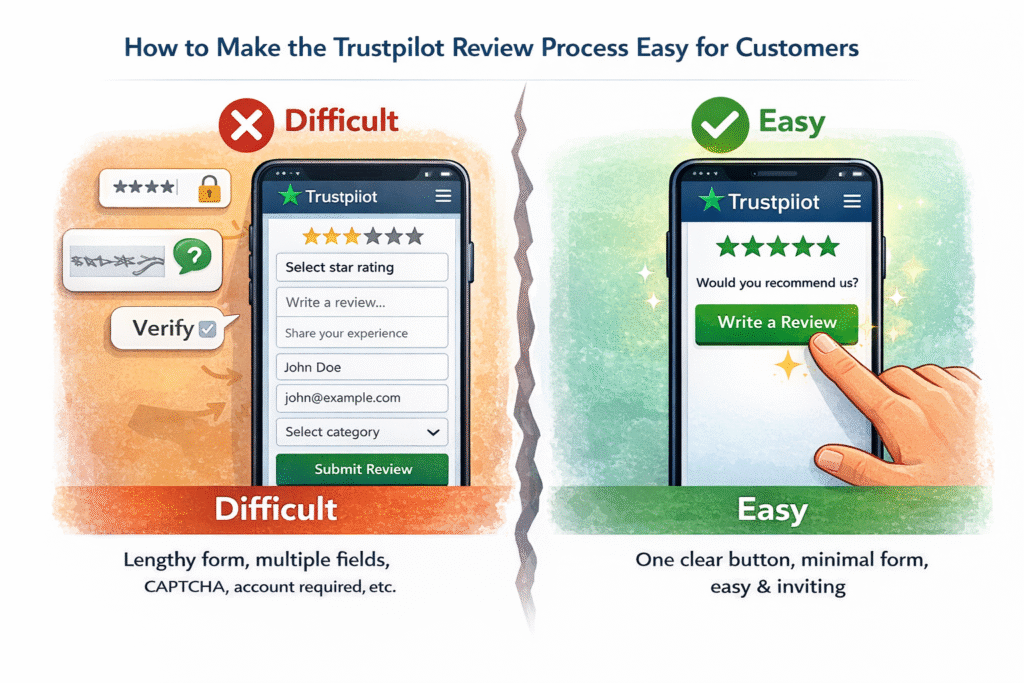
Most customers do not ignore review requests because they are unhappy with your business. They ignore them because leaving a review feels like extra work. Even small obstacles can stop someone from completing the process.
When you ask for a Trustpilot review, you should never expect customers to figure out where to go on their own. Sending them to your homepage and hoping they will search for your Trustpilot profile almost never works. Many people will get distracted or give up before they even find the review page.
The review request should take the customer exactly where they need to be. A direct link to your Trustpilot review page removes confusion and saves time. When the action requires only one clear click, more people are willing to follow through.
Speed also plays an important role. If the review form loads quickly and feels simple, customers are more likely to finish it. If the process feels slow, cluttered, or unclear, they will close the page and move on to something else.
Making the process easy is more effective than using clever words or strong persuasion. When reviewing feels simple and convenient, customers are far more likely to participate without hesitation.
How to Ask for Trustpilot Reviews Without Sounding Pushy
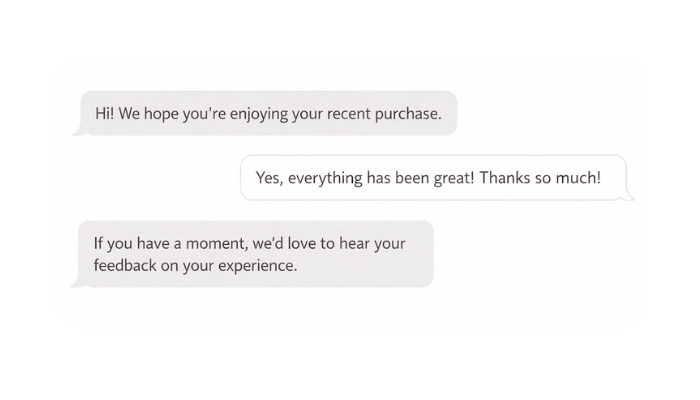
Many businesses struggle with review requests because their messages feel scripted or overly promotional. Customers can usually tell when a message has been copied, automated, or written to sell rather than to communicate. When that happens, the request feels like marketing instead of a genuine follow-up, and people are more likely to ignore it.
The most effective review requests are simple and direct. Use clear language and avoid exaggerated praise or formal corporate phrases. Instead of explaining why reviews are important to your business, focus on the customer’s recent experience. Mention the specific service or purchase they just completed so the request feels relevant and personal.
It is also important to respect the customer’s time. Acknowledge that leaving a review takes a moment and keep the message short. Ask politely and state exactly what you are requesting, without pressure or urgency. When a message sounds like it was written by a real person who values honest feedback, customers are far more comfortable responding.
When review requests feel human, calm, and respectful, they do not come across as pushy. They feel like a natural continuation of the conversation, which makes customers more willing to share their experience.
Should You Ask All Customers for Trustpilot Reviews

Many businesses hesitate to ask every customer for a Trustpilot review. They worry that unhappy customers might leave negative feedback, or they assume only satisfied customers are worth asking. This approach feels safe, but it creates more problems than it solves.
When review requests are sent only to selected customers, the pattern becomes uneven. Review platforms are designed to detect unnatural behavior. If reviews appear only after clearly positive interactions, it can raise trust signals internally and make the review profile look less authentic. Over time, this can limit visibility and credibility.
A better approach is to ask every customer in the same way and at the same stage of the journey. Some people will ignore the request. Some will leave neutral feedback. Many will leave positive reviews if the overall experience met their expectations. This mix is normal and healthy for a public review profile.
Asking everyone shows confidence in your service and respect for honest feedback. Consistency builds credibility because the process looks fair and transparent. Authenticity builds trust because real customers share real experiences. That trust is what makes future customers more comfortable choosing your business.
Where to Place Trustpilot Review Requests for Better Results
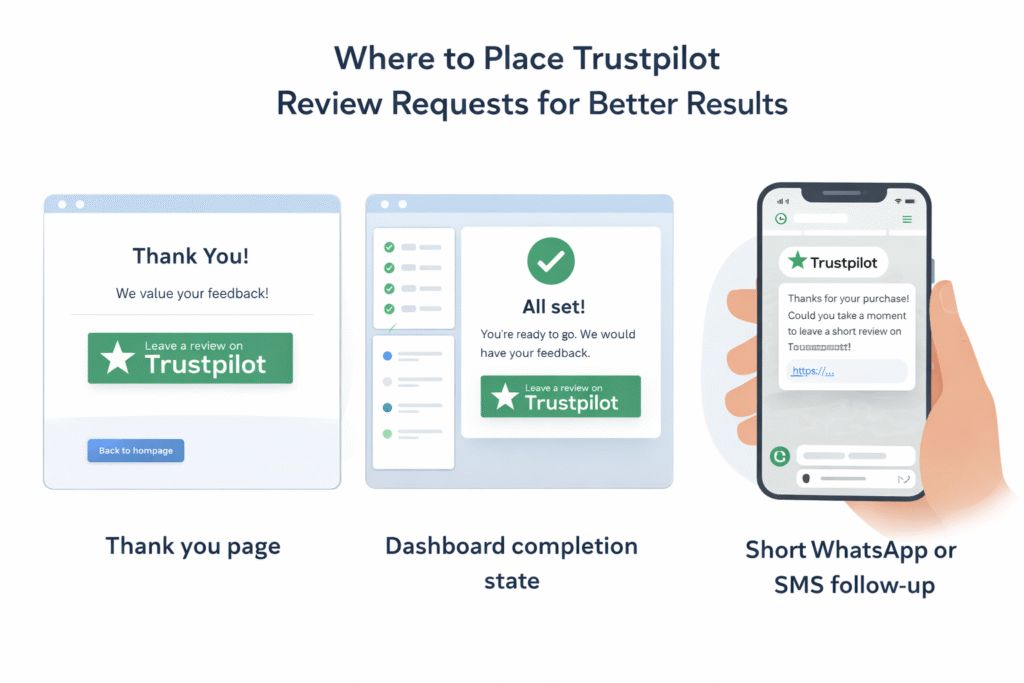
Relying only on email to collect reviews often leads to missed opportunities. Many customers overlook emails or plan to respond later and then forget. This does not mean they are unwilling to leave a review. It usually means the request did not appear at the right place in their journey.
Customers are more likely to leave a review when they are already engaged with your business. This can happen on a thank you page after a purchase, inside a user dashboard after completing an action, immediately after a successful payment, or through a short follow up message on WhatsApp or SMS. These moments work because the customer is still present, focused, and aware of the value they just received.
The key is not to interrupt the customer or distract them from what they are doing. Instead, place the review request where the journey naturally slows down or comes to a pause. At that point, leaving a review feels like a logical next step rather than an extra task.
When the review request fits naturally into the customer experience, people are far more likely to complete it. The easier and more seamless it feels, the better your results will be.
Why Responding to Trustpilot Reviews Helps You Get More Reviews
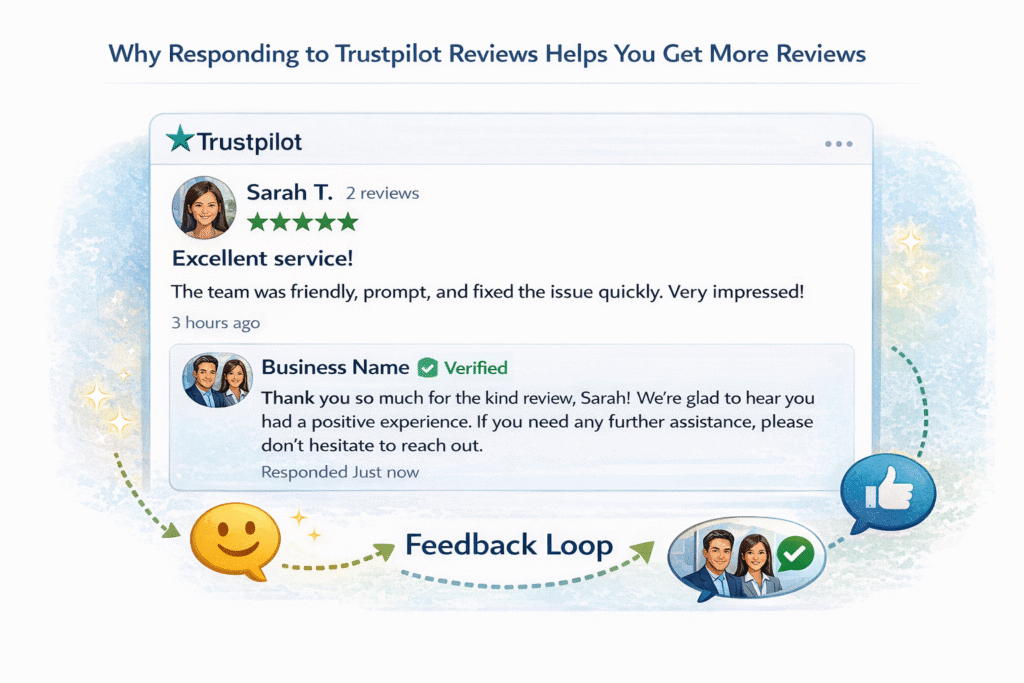
Responding to reviews is not only about protecting your reputation. It plays a direct role in encouraging more customers to leave reviews in the future.
When people see that a business replies to feedback, they understand that their opinion will not be ignored. This creates reassurance. Customers are more willing to spend time writing a review when they believe someone on the other side is actually listening. A visible response shows that reviews are read, not just collected.
Public replies also influence potential reviewers. When customers browse your Trustpilot profile and notice active responses, they feel more confident that their voice will matter as well. This silent reassurance often pushes hesitant users to leave feedback.
Your responses do not need to be detailed or scripted. In most cases, a simple thank you and a brief acknowledgment of the experience is enough. The goal is not to sound perfect. The goal is to show consistency and presence. Over time, this habit signals that reviewing your business is worthwhile, which naturally leads to more reviews.
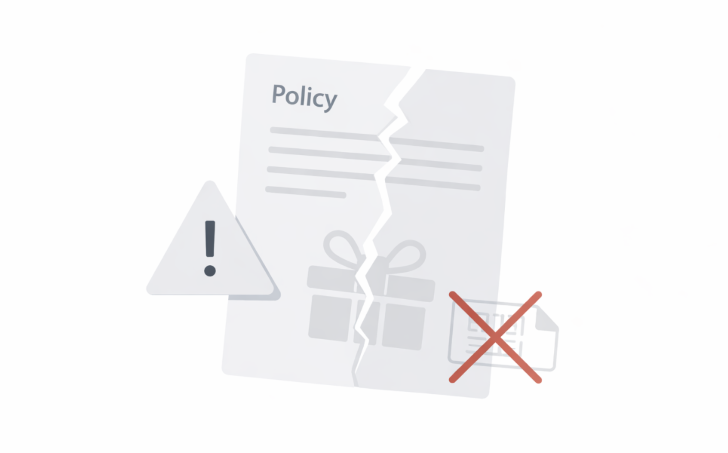
Why You Should Never Incentivize Trustpilot Reviews
This point needs to be explained clearly because many businesses get it wrong.
Offering discounts, credits, gifts, or giveaways in exchange for Trustpilot reviews is against the platform’s rules. Reviews on Trustpilot are meant to reflect genuine customer experiences. When incentives are involved, feedback is no longer fully honest. This can lead to reviews being flagged, removed, or your profile being restricted.
Incentivized reviews also damage trust. When customers suspect that reviews were written for rewards, the entire review section loses credibility. Even positive feedback starts to look questionable.
If your product or service delivers real value, you do not need to offer anything in return for reviews. Customers who have a clear and fair experience will share their opinions when the process is simple and the timing is right. Over time, honest reviews build a stronger and more reliable reputation than any short-term incentive ever could.
How to Build Trustpilot Reviews Consistently Over Time
Trustpilot reviews do not grow because of one big push or a short campaign. They grow when asking for reviews becomes part of your regular business process. Consistency matters far more than intensity.
Start by setting a realistic and repeatable habit. Decide how many customers you will invite for reviews each week and make that number achievable. It could be five, ten, or twenty, depending on your volume. The exact number is less important than doing it every week without gaps.
When review requests become routine, they stop feeling awkward or forced. Your team knows when to ask. Customers come to expect it as part of the closing experience. Over time, this steady approach creates momentum. Reviews start coming in more regularly, and your Trustpilot profile begins to look active and trustworthy.
The key point is simple. A clear system will always outperform motivation. Motivation fades. A process, once built, keeps working even on busy or difficult days.
Conclusion
If reviews are not coming in, the problem is rarely Trustpilot itself. In most cases, it comes down to poor timing, unnecessary friction, or the way the request is communicated.
Ask customers when the experience is still fresh in their minds. Make the review process simple and quick. Use language that sounds natural and respectful. Repeat this process consistently instead of treating reviews as a one time campaign.
When you approach reviews this way, growth happens quietly and steadily. There is no pressure, no shortcuts, and no risk to your profile. Over time, reviews become a normal outcome of doing good business.
