

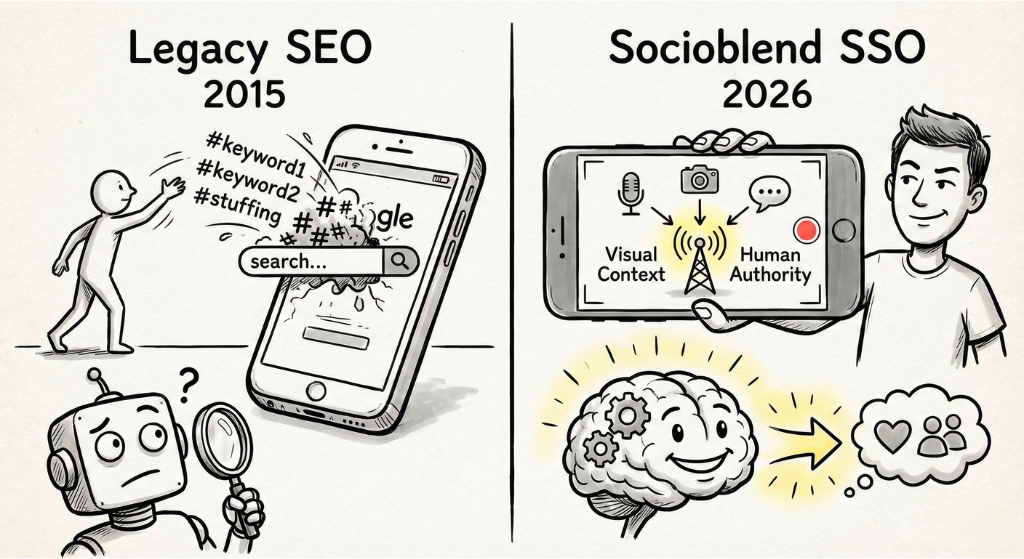
Let’s stop pretending Google is the only front door to your business. In 2026, if a potential client wants to solve a problem, because they aren’t searching, they’re scrolling. Social Search Optimization (SSO) has evolved from a “nice-to-have” growth hack into a fundamental survival requirement for any brand that refuses to be invisible. But here’s the Socioblend truth: most “experts” are still teaching you 2015 tactics in a 2026 world. Ranking in a social feed isn’t about keyword stuffing or chasing hashtags; it’s about mastering the invisible layers of visual context, audio cues, and raw, human authority.
The old way? Obsessing over a block of 30 hashtags. The Socioblend way? Optimizing for the machine’s eyes and ears. In 2026, social algorithms use computer vision to “scan” your video’s environment. If you’re pitching a high-end service but your background is cluttered or irrelevant, the AI fails to categorize you for a premium audience. We call this Object-Based SEO, your physical surroundings are now literal keywords. Simultaneously, every spoken word is transcribed and indexed in real-time. If your audio doesn’t align with your metadata, you’re burying your reach. Authenticity is no longer just a vibe; it’s a ranking signal.
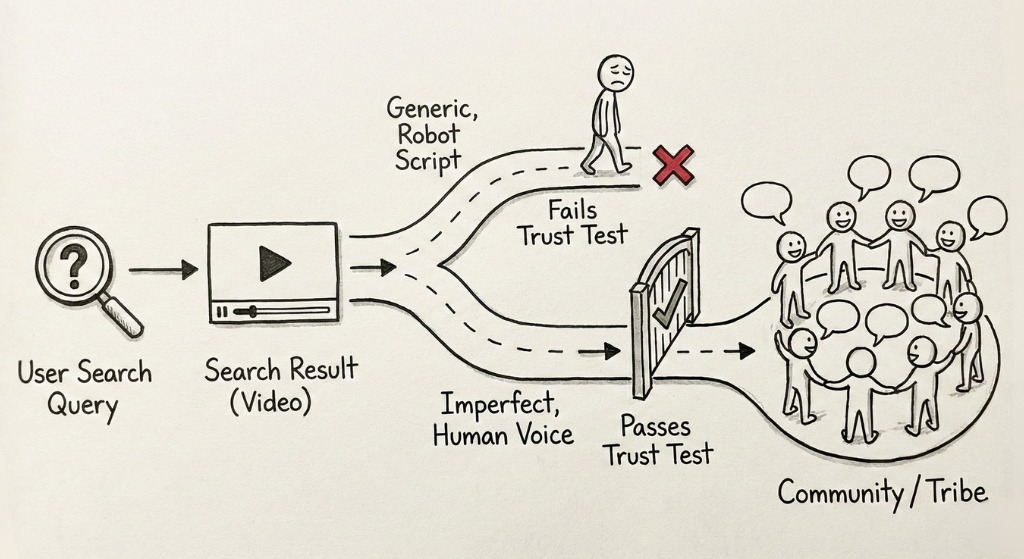
But ranking is only half the battle. If your search-optimized content feels like a generic, robot-generated script, you’ve failed the “Trust Test.” At Socioblend, we prioritize the Search-to-Community Bridge. A user finds you via a search for an answer, but they stay for your unique perspective. This is where “imperfect” brand voices and raw, behind-the-scenes insights outperform high-gloss, soulless production. Your content must pivot from simply solving a problem to inviting them into a tribe. In 2026, retention is the ultimate ranking signal and you can’t retain people with boring, automated answers. Your goal isn’t just a view; it’s a loyalist.
So, how do you execute? It starts with abandoning “keyword stuffing” for Semantic Intent. In 2026, the algorithm doesn’t just look for words; it looks for the relationship between them. Your captions should read like a voice note to a colleague, yet contain the structural DNA of a search result. At Socioblend, we call this Conversational Metadata. You include the user’s problem in the first sentence, your proprietary solution in the middle, and a community-driven hook at the end. By aligning your text with your visual and audio keywords, you create a 360-degree signal that makes your authority undeniable.
Also read: Reddit for SEO: Find Real Topics People Actually Want
The Socioblend SSO Blueprint: Your 4-Step Checklist
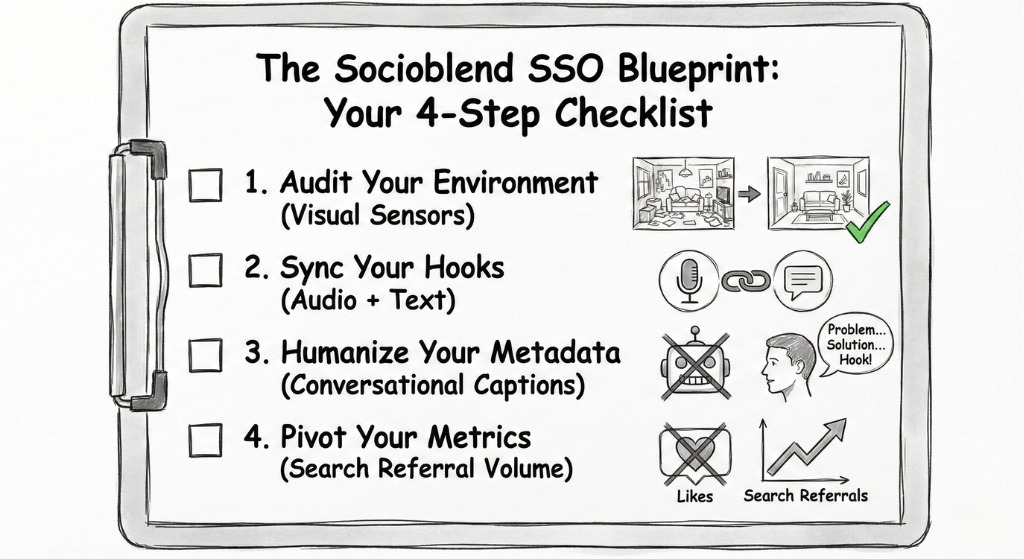
To bridge the gap between invisible and unmissable, here is your immediate action plan. First, audit your environment: ensure your background objects mirror your niche to satisfy the AI’s visual sensors. Second, sync your hooks: your spoken audio must perfectly match your on-screen text to double-down on search signals. Third, humanize your metadata: write captions that solve a problem while inviting a conversation. Finally, pivot your metrics: stop chasing vanity likes and start measuring “Search Referral Volume.” This is how you stop being a choice and start becoming the only logical answer.
The Shift: Legacy SEO vs. The Socioblend SSO Standard
To truly master the 2026 landscape, you must understand that the “rules of engagement” have fundamentally shifted. We aren’t just optimizing for a search bar anymore; we are optimizing for a discovery engine. That said, traditional SEO signals still matter when users leave social platforms and verify your authority through search engines. A strong backlink profile remains one of the key credibility indicators, which is why brands often build foundational links such as manual profile, forum, and Web 2.0 backlinks to support long-term ranking stability.
| Feature | Legacy Google SEO | The Socioblend SSO Standard |
| Primary Goal | Ranking for specific text queries. | Engineering discovery and retention. |
| Algorithm Focus | Backlinks and domain authority. | Watch time and “Identity-matching.” |
| Keyword Logic | Static, high-volume “head” terms. | Semantic, conversational intent. |
| Search Signals | Metadata and Alt-text. | Multi-modal (Audio, Visual, and Text). |
| User Intent | Finding an answer or a product. | Finding a voice or a community. |
The Socioblend perspective is simple: If you apply Google tactics to a TikTok feed, you aren’t just wasting time, you’re telling the algorithm that your brand is “static.” In the new era, dynamic relevance is the only currency that matters. You don’t just want to be the answer to a question; you want to be the start of a rabbit hole.
The Ghost Ranking Trap: Why Visibility is a Lie
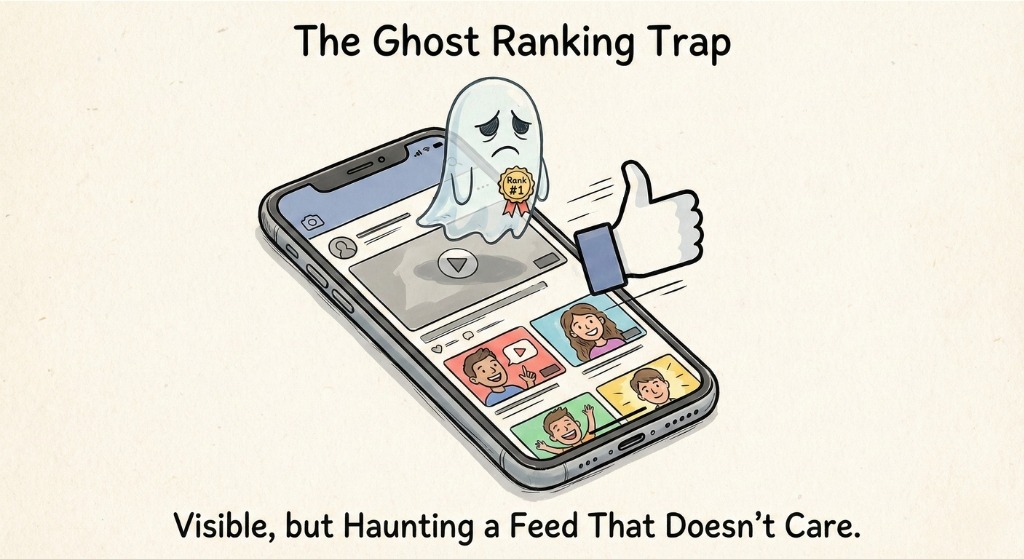
Beware of the “Ghost Ranking” trap. In the race to the top of the search results, many brands are winning the rank but losing the war. You might hit #1 for a high-intent keyword, but if your content doesn’t instantly convert that searcher into a viewer, you are simply a “Ghost Ranker.” You are visible, but you are haunting a feed that doesn’t care.
The Socioblend Truth: If a user finds you via search but immediately scrolls past your hook, the algorithm registers a “Negative Signal.” Too many of these tell the platform your brand is clickbait, not authority. In 2026, ranking without retention is a death sentence for your organic reach. True SSO isn’t just about appearing; it’s about earning the right to stay.
Final Thought: The New Standard of Authority
Modern social platforms don’t reward the loudest voice anymore; they reward the most relevant one. Social Search Optimization isn’t just a technical update, it’s a shift in how you respect your audience’s time. In 2026, every piece of content you post is an open invitation. If that invitation is generic, it will be declined. If it’s optimized only for bots, real people will ignore it.
The Socioblend Standard is about creating a “360-degree signal”,where your visuals, your audio, and your words all point to a single, undeniable truth: You are the expert they’ve been looking for.
Your Next Move: Stop Ghost Ranking
You have two choices: continue chasing 2015 “best practices” while your reach slowly evaporates, or pivot to a strategy built for the next decade of discovery.
- The 24-Hour Audit: Go to your last three videos. Do the background objects match your niche? Does your caption read like a person or a robot?
- The Semantic Shift: Identify the top 5 questions your audience is asking right now and answer them using our Conversational Metadata framework.
